
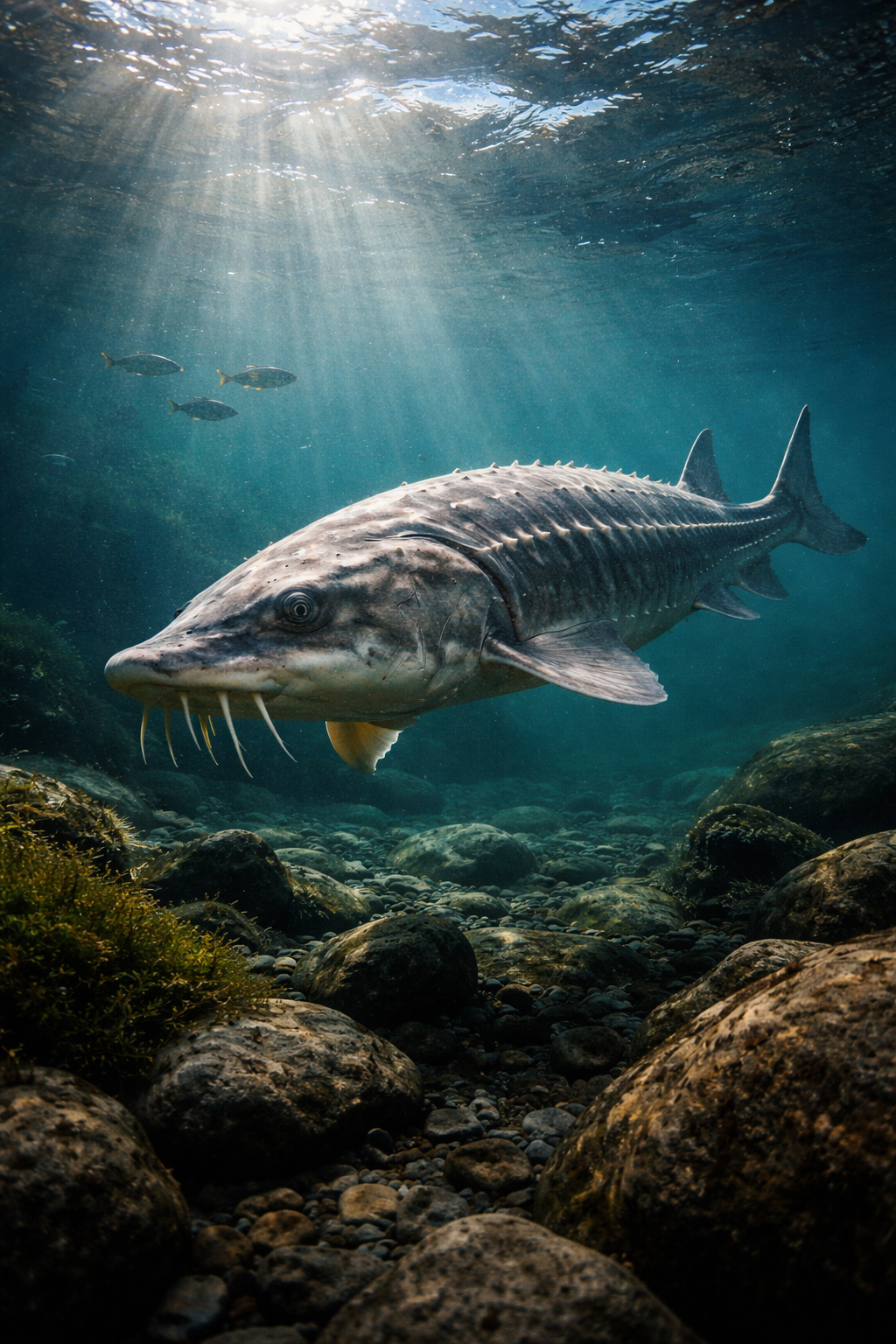
The first thing to say about the white sturgeon is that it does not read like an ordinary fish. Even the word fish feels oddly insufficient once the image is clear: the elongated body, the bony scutes, the whiskered face, the patient movement through deep current, the sense that one is not looking at something designed for quick visual friendliness. The sturgeon seems built from older priorities. It has none of the bright decorative appeal of smaller river species. Its grandeur lies elsewhere—in age, scale, and the refusal to have evolved into anything more charming for our benefit.
This is precisely why it matters so much to Idaho’s animal identity. The state’s rivers are already central to its imagination, but the sturgeon enlarges them beyond recreation and scenery. It tells us that these waters are not merely beautiful or useful. They are ancient corridors capable of sustaining forms of life that feel almost geologic. The river, in the presence of a white sturgeon, becomes less a pleasant landscape feature and more a historical force.
The white sturgeon gives Idaho something few places can claim honestly: a creature that makes the present feel young.
That youthfulness of the present is one of the animal’s great symbolic gifts. Modern life tends to make everything feel recent, accelerated, and replaceable. The sturgeon interrupts that tempo. It appears as a living rebuke to disposable thinking. It says, simply by existing, that some lives are structured on scales of time longer than our usual imagination. One cannot look at such a creature without feeling, however briefly, that human history has entered a deeper room than it expected.
The River Beneath the River
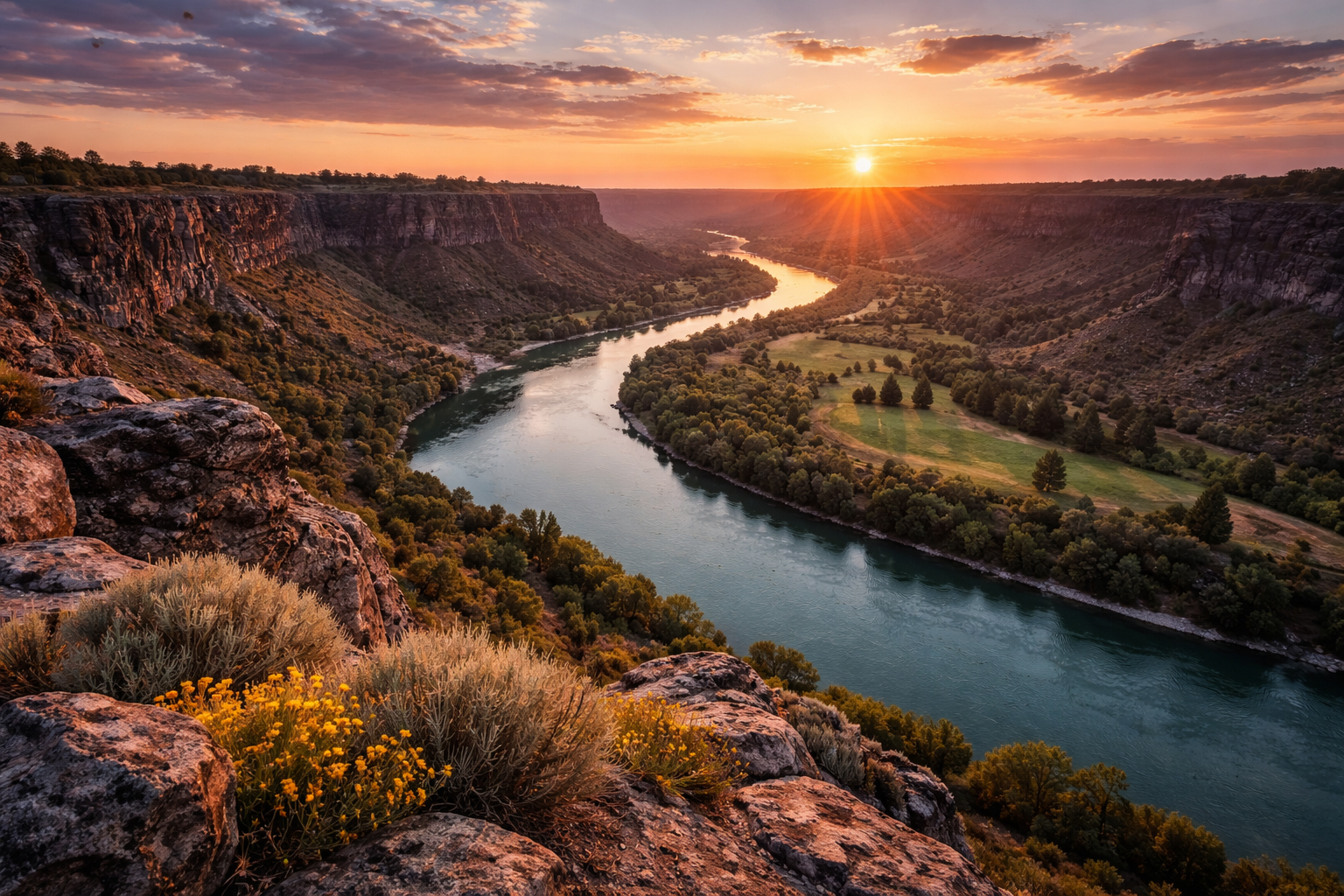
Most people encounter a river at the surface. They notice light, current, reflection, temperature, the visible edge where water meets rock or bank. The white sturgeon belongs to the river beneath that experience—the older river, the slower river, the river as depth rather than shimmer. It is a creature that asks us to imagine what the current is carrying below the visible narrative.
This matters because Idaho’s best landscapes often contain a second life beneath the first impression. A mountain range is not only scenic; it is also weather, geology, route, and hard country. A canyon is not only dramatic; it is structure, habitat, and consequence. The same is true of the river. The sturgeon restores that second life to view. It suggests that what appears clean and immediate at the surface may conceal histories far stranger and more patient underneath.
In that sense the sturgeon is a perfect Idaho animal. It deepens the place rather than simply adorning it. It makes the state’s waters feel less recreationally available and more serious. It asks for respect not through speed or ferocity, but through duration.
Armor, Weight, and the Refusal of Elegance
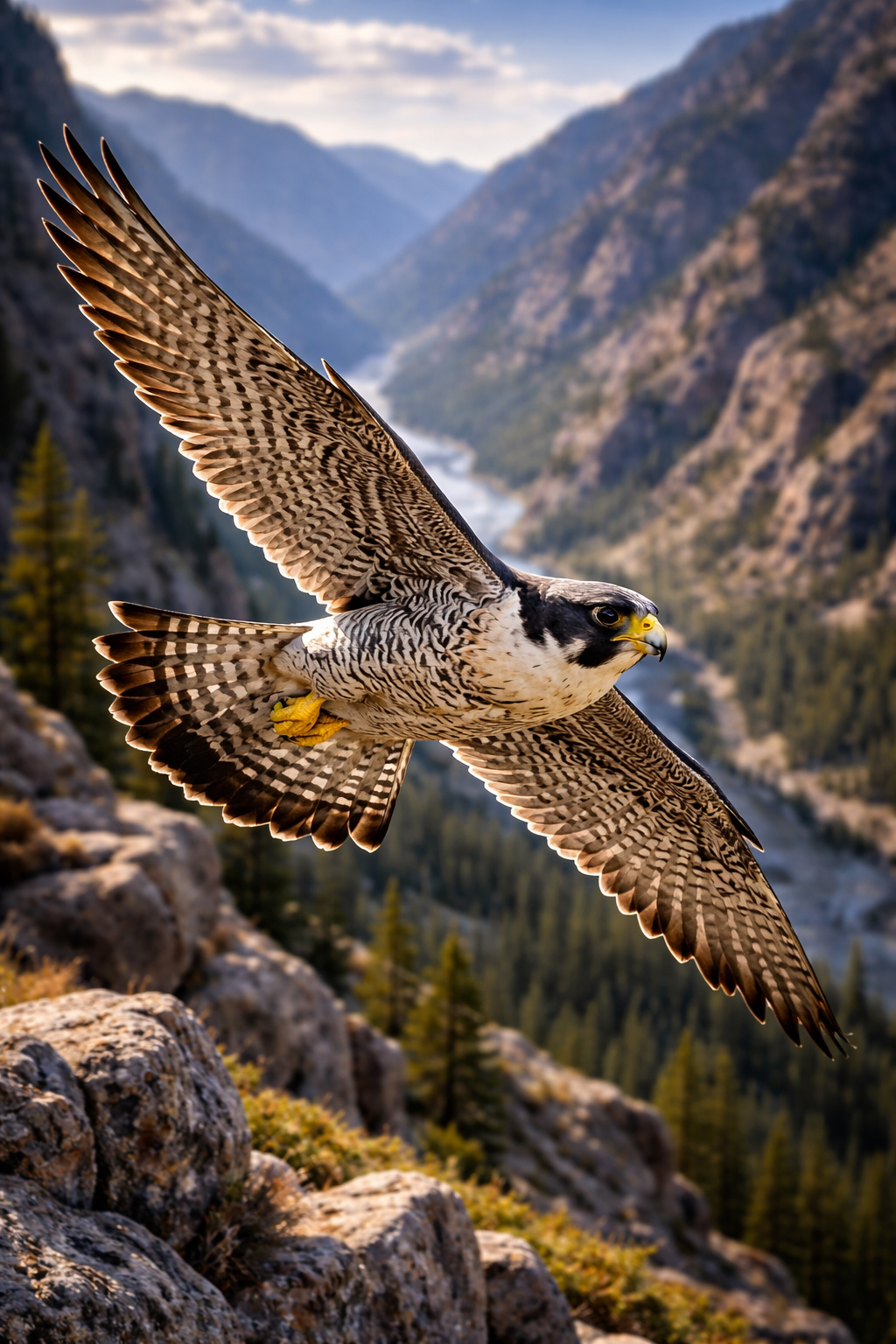
Modern wildlife photography often prefers elegance. Wings extended, fur lit just so, the body resolved into a pleasing composition. The white sturgeon is impressive precisely because it refuses elegance in the conventional sense. It is not sleek like the falcon. It is not balanced like the bighorn sheep. It is not photogenic in a familiar way. Its greatness lies in its weight, its armored strangeness, its blunt prehistoric authority.
That refusal is part of its beauty. The sturgeon has not been civilized into grace. It carries a more archaic dignity. Its face appears almost severe with age, its body designed not for display but for endurance. It is the sort of creature that makes a person realize how narrow modern aesthetic instincts have become. We are accustomed to beauty that flatters our habits of seeing. The sturgeon belongs to a harsher category: beauty that enlarges them.
This is one reason the animal feels so right for Idaho. The state at its best is not merely pretty. It is formidable, layered, and a little strange. The white sturgeon fits that truth better than any tidy emblem could.
The sturgeon does not ask to be admired as a spectacle. It commands admiration as an inheritance.
The Animal of Deep Time
Some animals are memorable because they dramatize the present. The peregrine falcon embodies speed now. The wolverine embodies mountain severity now. The sturgeon does something rarer: it imports deep time into the present tense. It feels as though it has persisted through conditions we can barely imagine, and now happens to be sharing the same century as us without belonging emotionally to it.
That sensation is not just scientific curiosity translated into emotion. It is one of the oldest human responses to certain creatures. We feel it before giant trees, before ancient reptiles, before certain whales, before fossils that still seem like instructions from a world with larger patience. The white sturgeon enters that category in Idaho. It makes the state’s rivers feel not merely historic, but primordial in mood.
And because Idaho is already a state that trades heavily, and often legitimately, on the depth of its natural experience, the sturgeon becomes more than one more impressive species. It becomes a corrective to superficial nature. It says: there is more here than mountain chic, more than summer light, more than sportsman’s romance. There are old things still moving under the surface.
Why the Giant Matters
The word giant in the title is not just a size claim. It is a way of talking about presence. A giant alters proportion around itself. The white sturgeon does exactly that. It changes how one imagines the river, how one imagines Idaho, how one imagines the continuity of life in a place otherwise too easily summarized through peaks, pines, and open roads. A giant gives scale back to the world.
That is one reason a serious Idaho animal section must include the sturgeon prominently. Without it, the state’s living gallery becomes too biased toward the dramatic surface. The sturgeon restores the underwater and the ancient. It reminds us that a region’s identity is partly made by the creatures that occupy its least visible dimensions.
It also strengthens the river as symbol. Rivers in western writing are often given too much moral flexibility. They become escape, recreation, purification, beauty, frontier passage, or metaphor for time itself depending on the author’s mood. The white sturgeon makes the river more concrete than that. It ties the water to actual duration, actual body, actual old life. The symbol becomes less sentimental and more true.
The Ancient Giant
The title, at last, is exactly right. White Sturgeon: The Ancient Giant. Ancient because it carries a visible memory of older worlds. Giant because it alters scale. The two words belong together. Without the age, it would be merely large. Without the size, it would be merely old. Together they create the animal’s full emotional force.
For Idaho, that force is invaluable. The sturgeon makes the state less easy and more compelling. It insists that the river contains things not designed for casual consumption. It asks readers to imagine Idaho in a longer tense. It adds gravity to water, age to motion, and a kind of underwater solemnity to the state’s natural imagination.
The white sturgeon matters because it keeps Idaho from becoming too recent in its own mind.
That may be the highest compliment one can pay an animal symbol. Not that it flatters the state, but that it deepens it. The white sturgeon deepens Idaho every time it is remembered properly. It says the river is older than your mood, the state older than your itinerary, the land stranger than your summary. In a place already rich with visible grandeur, that hidden grandeur may be the most precious one of all.