
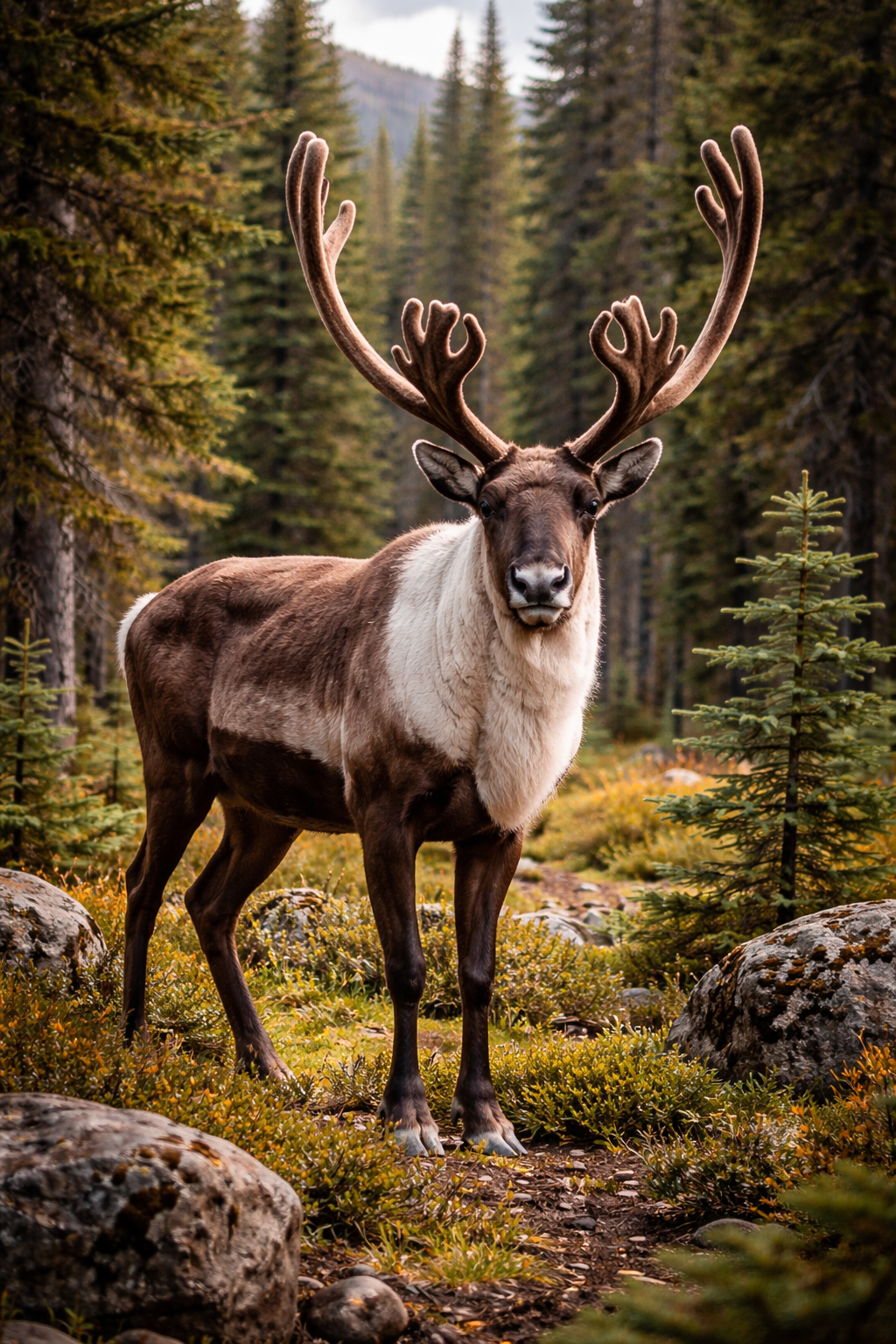
The caribou is not the animal most outsiders associate with Idaho. That is part of its power. Ask for Idaho wildlife and people will offer the usual cast: elk, moose, trout, falcon, bear, bighorn sheep. All worthy. All dramatically fitted to the place. But the woodland caribou introduces another register entirely. It brings with it the idea of remoteness not merely as scenery, but as biological atmosphere. It suggests country so cold, so quiet, and so forested in memory that the state begins to feel less like a postcard West and more like the edge of a northern world.
That is why the phrase “ghost of the northern forest” feels right. Not because the animal is unreal, but because its reality is so elusive that it moves toward the symbolic almost by necessity. The caribou lives in the imagination of Idaho differently than the more public beasts do. It does not perform itself from roadside turnouts. It does not cooperate with the visitor economy. It remains what the best wild things remain: answerable first to habitat, weather, and old patterns of movement rather than to our desire for visual possession.
The woodland caribou gives Idaho one of its rarest luxuries: an animal that still belongs more fully to the forest than to the human story about the forest.
This matters because modern wildlife culture is often too eager to make every creature legible in the same cheerful way. We want quick recognition, clean symbolism, and the satisfaction of knowing where each animal fits in the regional brand. The caribou resists such handling. It belongs to a harsher and more austere imagination. Its presence in Idaho says that the state is not merely dramatic. It is still, in some corners, difficult enough to sustain wonder without helping us too much.
A Northern Animal in a Western State
The woodland caribou’s power in Idaho begins with slight dislocation. It feels, to many people, like an animal that ought to belong farther north, farther away, deeper into another map entirely. That sensation is revealing. It tells us something about Idaho itself—that the state is more tonally varied than its clichés suggest. It is not only ranch and river and summer mountain recreation. It also contains moods of boreal reserve, high winter silence, and forest depth that press against the imagination from the north.
To think of caribou in Idaho is to think of the state not as one thing, but as a layered territory of climates and identities. It reminds us that Idaho is not merely a western state in the generic American sense. It is a state of transitions: from high desert to alpine lake, from open range to cedar-dark forest, from civic calm to near-mythic remoteness. The caribou belongs to the coldest, quietest end of that spectrum. It marks one of Idaho’s least advertised truths.
There is something intellectually pleasing about this. The animal corrects the tourist imagination. It widens the state. It says: you thought you understood the region, but there is another register here, one colder and more elusive than the first impression allowed.
The Prestige of Elusiveness
Not all rarity is equal. Some rare things feel merely absent. The woodland caribou feels charged. Its scarcity does not diminish its symbolic value; it heightens it. The creature becomes a measure of what remains difficult in Idaho. It is tied to places where weather still matters enough to silence the human ego, where the forest has not surrendered all its terms, and where presence itself becomes a question of patience and chance rather than guaranteed encounter.
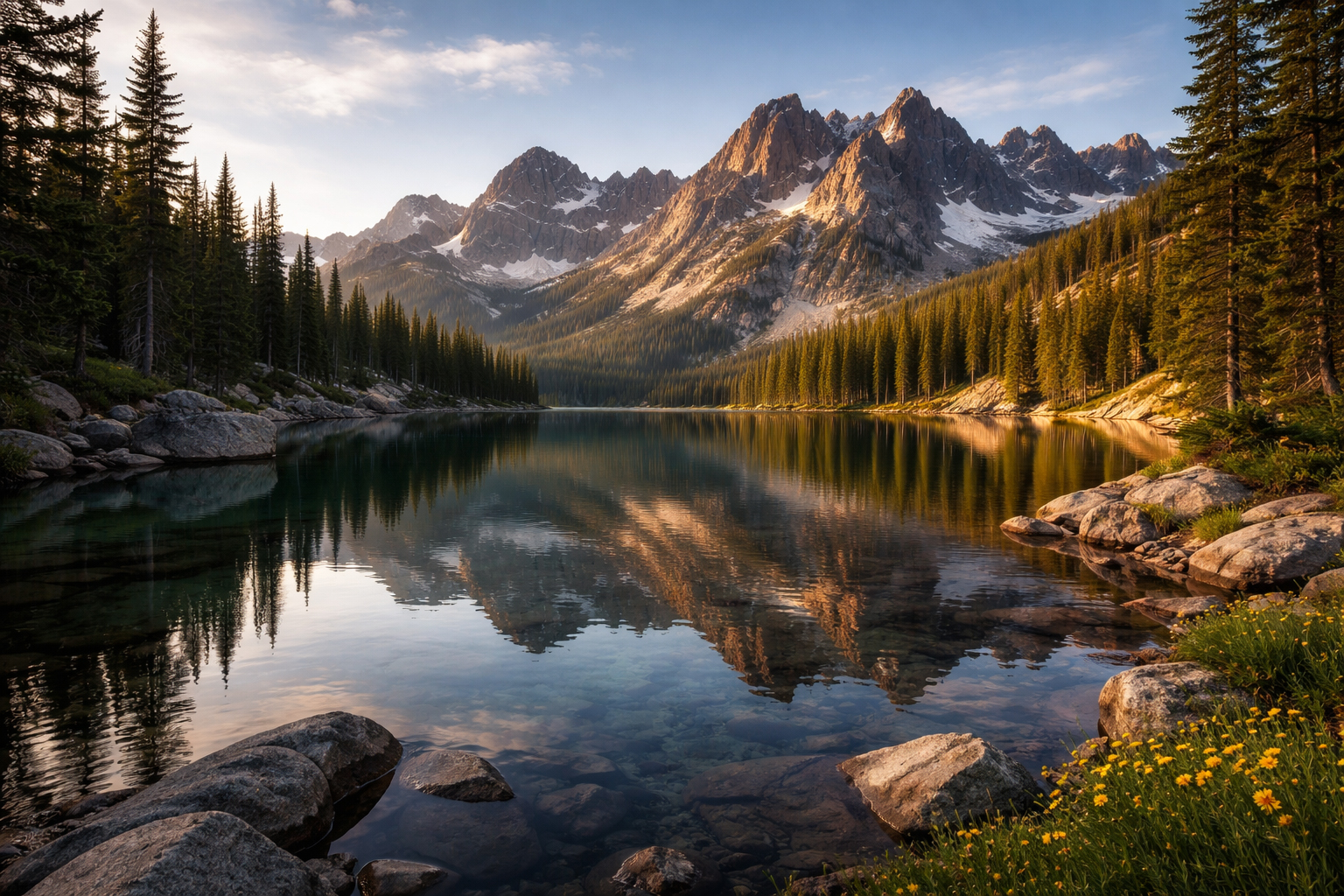
There is prestige in such elusiveness, though one must be careful with that word. Prestige here does not mean glamour. It means moral elevation within the landscape. The caribou is prestigious because it is not easy. It is one of the creatures that tells us a place is still large enough to contain mystery. Modern life thins too many animals into content. The caribou, by contrast, remains stubbornly atmospheric. It lives not only in ecological space, but in the zone where ecology becomes feeling.
This is why writers keep reaching for ghost language around it. Ghost, shadow, presence, trace. Such terms are not biologically precise, but they are emotionally apt. They record the fact that the animal enters human meaning not through abundance, but through threshold. One senses it at the edge of comprehension. That edge is one of Idaho’s great resources.
The Animal as Climate
Some animals define a landscape. Others define a climate of mind. The woodland caribou does both. It belongs to forests that feel older than the roads passing near them and to winters that still impose order. It belongs to lichen, snow, steep timber, and the difficult continuities of northern habitat. Even when one is not speaking scientifically, one feels that its proper world is one of cold endurance and quiet judgment.
To place such an animal inside Idaho is to enrich the state’s emotional weather. It means Idaho is not only bold, rugged, and scenic. It is also spectral, restrained, and severe in a colder register. This is an important correction. Many states would be happy to be summed up through their easiest symbols. Idaho is stronger when it is allowed its stranger creatures too.
The caribou makes Idaho feel less finished, and that is one of the highest compliments a landscape can receive.
The sentence may sound paradoxical, but it points toward a truth. Finished landscapes are often overexplained landscapes. Every meaning has been assigned, every animal brand-approved, every vista taught how to flatter. Idaho resists that condition in part because it still contains figures—human and animal alike—that trouble easy summary. The woodland caribou is one of the best of them.
Why It Belongs in The Idaho Identity
A magazine called The Idaho Identity should be suspicious of identity that becomes too obvious. The best state identities retain edges, absences, and difficult silhouettes. The caribou gives Idaho exactly that. It asks readers to imagine the state beyond its most photographed settings and into a colder, more vulnerable, more northern interior. It links Idaho not only to adventure and recreation, but to continuity and fragility. That combination is mature. It asks more of the reader than admiration alone.
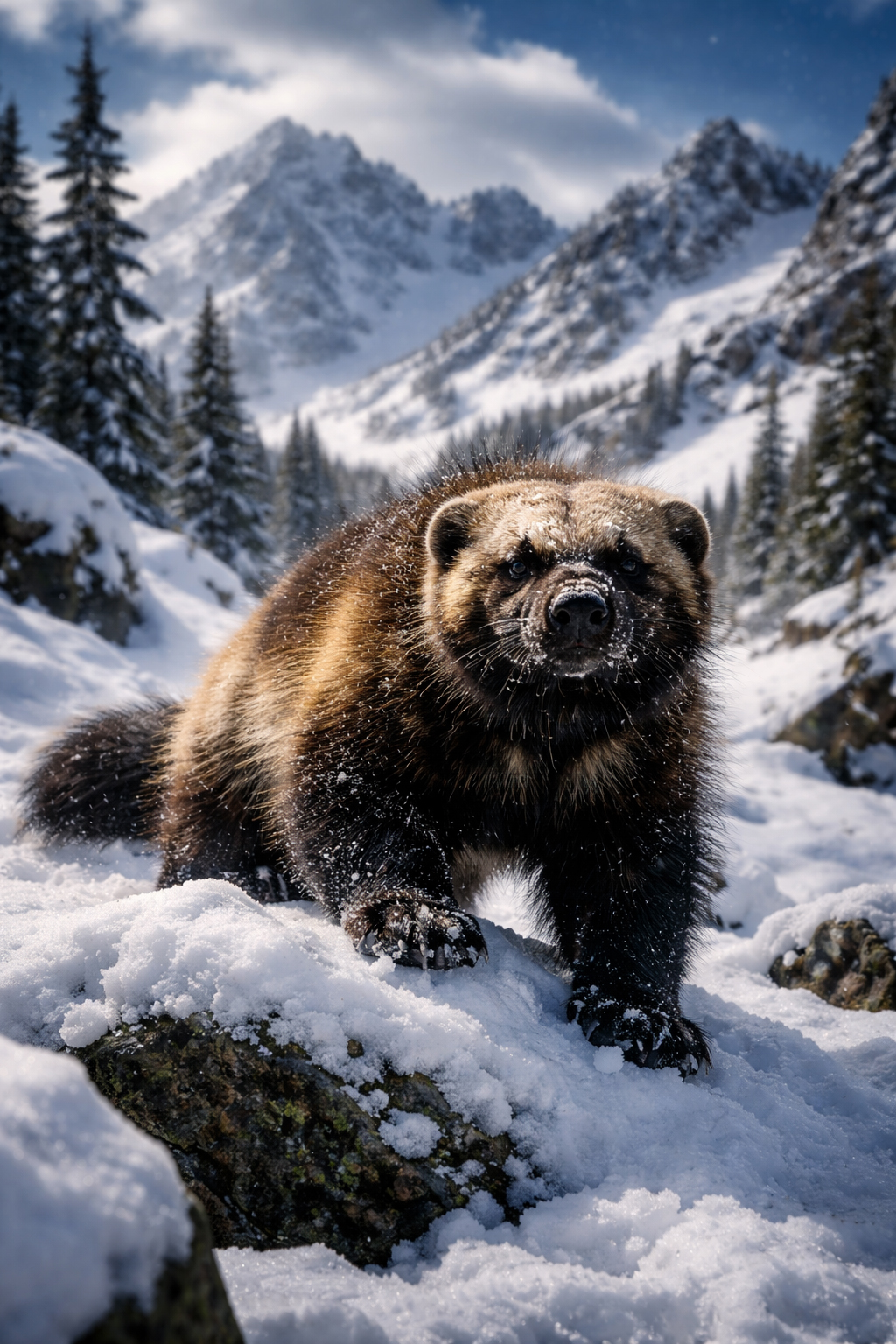
It also expands the animals desk beyond spectacle. Yes, the peregrine is magnificent. Yes, the white sturgeon feels prehistoric. Yes, the wolverine carries alpine ferocity like an argument. But the caribou contributes a subtler grandeur. It is the grandeur of the nearly lost, the half-glimpsed, the ecologically exacting. Its power lies not in aggressive force but in austere persistence.
That difference matters for Idaho’s self-image. States too often prefer animals that flatter a simple fantasy of toughness. The caribou offers a better and more difficult lesson. True distinction is not always loud. Sometimes it is quiet enough that only the most attentive people even know it is there.
The Forest Keeps Its Own Terms
There is something morally clarifying about animals that refuse easy intimacy. The woodland caribou belongs to that class. It reminds human beings that landscape is not exhausted by our uses of it. Forest is not merely recreation. Winter is not merely backdrop. Wild country is not important only because it hosts our chosen activities. The caribou stands for a different hierarchy. It suggests that the forest may still have meanings in which we are secondary.
That is one reason the caribou feels so haunting. It carries a rebuke to human-centered reading of the land. Not an angry rebuke. A colder one. It says: this place is not entirely for you. Such reminders are healthy, especially in a time when scenic landscapes are continuously translated into lifestyle language. The caribou interrupts that translation. It returns us to seriousness.
A Creature of the State’s Unsaid Self
Every state has an official face and an unsaid self. The official face smiles from brochures and chamber-of-commerce optimism. The unsaid self lives in climate, in contradiction, in old memory, in lesser-known species, in figures that do not fit the polished script. The woodland caribou belongs to Idaho’s unsaid self. It is one of the animals that makes the state stranger than its publicity and better than its simplifications.
That is why it deserves a feature and not just a wildlife caption. The caribou is not only an animal in Idaho. It is a piece of the state’s interior tone. It cools the imagination. It darkens the forest. It tells us that Idaho’s identity is not only bright water, clean peaks, and easy frontier confidence. It also includes the possibility of cold secrecy, difficult survival, and a beauty that remains partly withheld.
Woodland caribou: the ghost of the northern forest. The phrase holds because the animal holds. It keeps Idaho open at the edges. It prevents the state from becoming too completely known. And in an age of overexposure, there may be no greater gift a creature can give a place than that.