
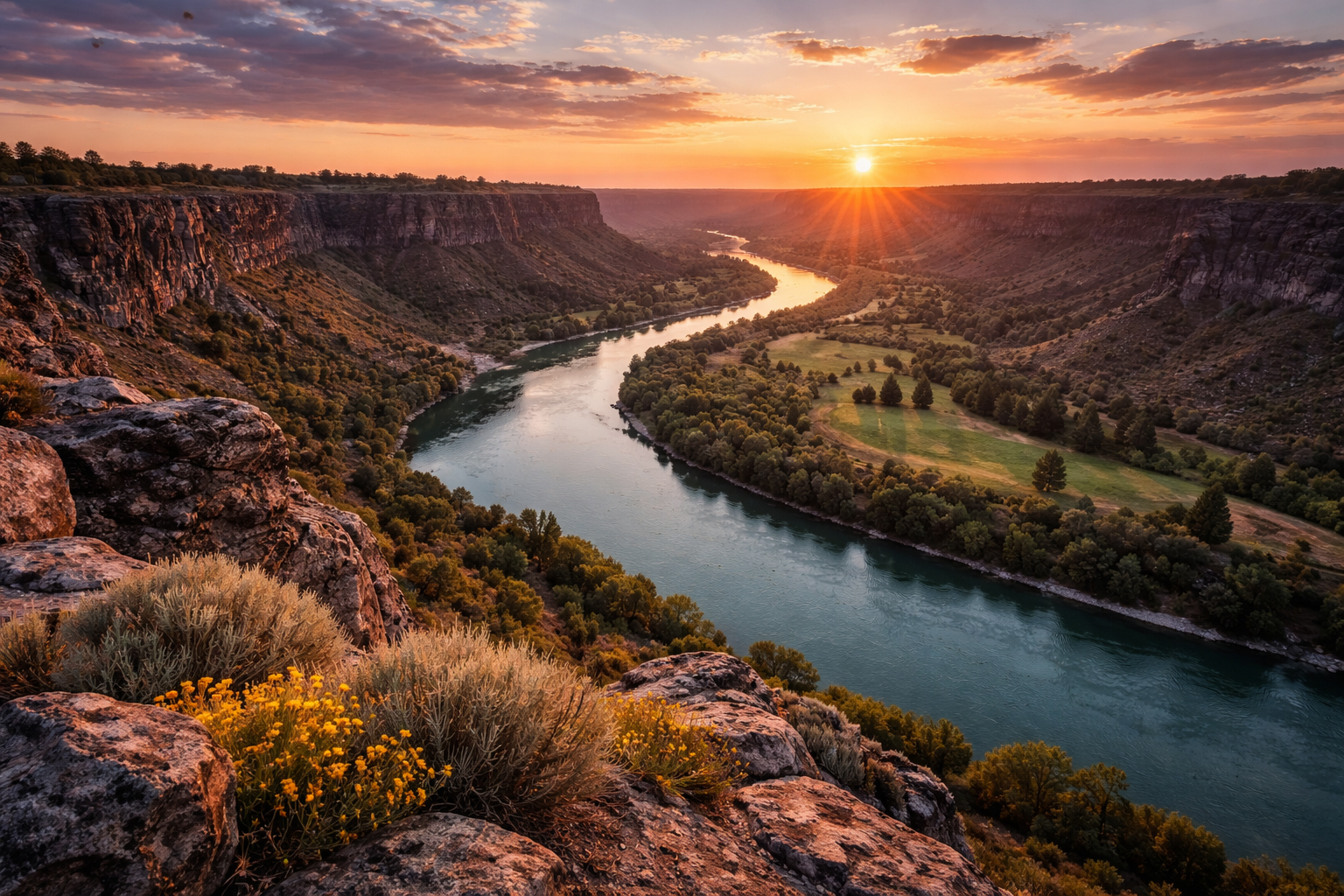
The temptation in western history is always to begin with the wrong kind of drama. Gold. Territory. Exploration. Rail. Statehood. These are real milestones, but they are not origins. They are accelerants. Idaho’s original character was already present before the administrative story started arranging itself into recognizable chapters. It existed in the knowledge of river systems, in the use of mountain passages, in the judgment required to survive winter, in the relation between valley and plateau, in the fact that this landscape was inhabited not as scenery but as intelligence.
That older intelligence matters because Idaho is still shaped by it, even where it has forgotten how to name it. A state’s character is not simply a set of values printed on brochures or repeated in speeches. It is a pattern of responses formed under pressure over long periods of time. Idaho learned early that beauty does not eliminate difficulty. That distance is not merely spatial but moral. That weather has authority. That movement through the land requires more than appetite. Those lessons predate the state, but the state inherited them all the same.
Idaho’s first character was not promotional. It was practical, relational, and exacting.
It is useful to say the word exacting here. Idaho was not originally a soft place. Even now, for all the resort polish and cinematic mountain imagery that sometimes dominate the outside imagination, the underlying truth remains sterner. The state rewards competence. It respects people who can endure, build, repair, read weather, move through distance, and keep their minds in difficult country. This ethic did not appear from nowhere. It emerged from the conditions under which Idaho first had to be lived.
The Homeland Beneath the Map
One does not understand Idaho by starting with its later boundaries and then reading backward. One understands it by recognizing that the land was already full of meaning before it was parceled into state logic. The valleys and mountain corridors, the fisheries, the travel routes, the plateaus, the rivers running north or south depending on where one stands in relation to them—none of these were blank conditions awaiting interpretation by newcomers. They were already known. The first character of Idaho was therefore not settler daring, but Indigenous understanding.
This is not a ritual acknowledgment inserted for moral hygiene. It is the central historical fact. The landscape was legible long before the American state tried to make it official. The famous passages through Idaho were never passages through emptiness. They were movements through worlds already inhabited by memory and use. To forget this is not simply to be incomplete. It is to misunderstand the logic of the place from the start.
That deeper beginning gives Idaho a seriousness many younger state identities struggle to maintain. It means the state’s story is older than its institutions and broader than its later myths. It means the official narrative of exploration must be interrupted by the more difficult truth that exploration often depended on existing knowledge it did not fully honor. It means the character of Idaho begins in relation rather than possession.
Hard Country, Fast Ambition
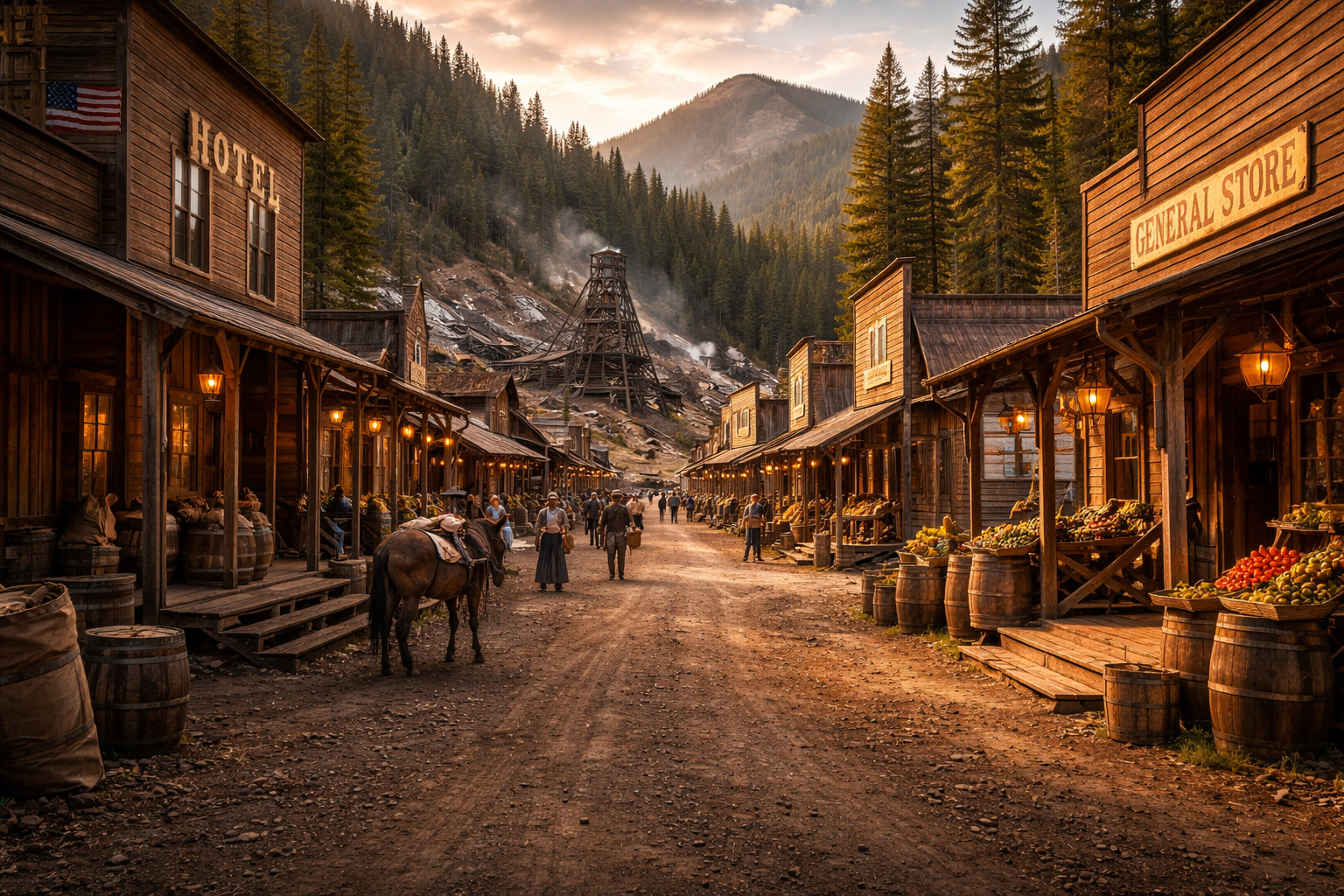
Then came the rushes of history that most people mistake for the beginning. Gold changed tempo. Towns appeared with astonishing speed and vanished with nearly equal enthusiasm. Institutions were improvised. Roads were argued into existence. Newspapers arrived. Lawyers, merchants, drifters, freight operators, politicians, hustlers, surveyors, miners, and visionaries all entered the same hard geography, and the result was the usual western mixture of aspiration and disorder. Idaho’s original character did not disappear under this pressure. It absorbed it.
This is one reason Idaho remains so interesting historically. Some places were softened by settlement into predictability. Idaho retained a certain edge. The mining frontier did not merely enrich or disorder it; it intensified its appetite for scale. It taught the region how quickly human ambition could take root in remote country. It also taught, just as quickly, the cost of overreach. Boomtown logic creates a special kind of local intelligence: opportunistic, improvisational, skeptical, alert to both profit and collapse. Idaho acquired that intelligence early and never fully lost it.
Mining towns therefore matter not only because they produce historical color, but because they reveal a state learning how to combine rough practicality with symbolic hunger. People did not come only to dig. They came to build a civic world around the digging: papers, courts, hotels, saloons, stores, schools, arguments, reputations, offices, monuments, memory. A raw place almost immediately wanted form. That desire for form—visible later in art, politics, and architecture—is part of Idaho’s original character too.
Idaho learned very early that extraction alone does not make a society. Even a hard place wants form, ritual, and self-regard.
The Temperament of Distance
Another defining element of Idaho’s original character is distance. Distance is not merely miles. It is a style of thought. It trains patience, self-containment, and a suspicion of easy dependence. It can also encourage myth, stubbornness, and provincial self-satisfaction if left uncorrected. Idaho has known all these tendencies. But at its best, distance gives the state something finer: a composed self-respect. A sense that not everything valuable needs immediate national validation in order to count.
This is why Idaho’s character often feels at once reserved and strong. Places accustomed to long intervals and hard logistics do not generally perform themselves in the same manner as places built on constant friction and exchange. They tend to hold back a little. They value room. They dislike unnecessary fuss. Their people often read overstatement as weakness rather than strength. Idaho has this temperament still. One can see it in the best parts of Boise, in the quieter forms of mountain hospitality, in the state’s respect for capability, and in its enduring mistrust of pretension.
That mistrust, of course, can become its own form of vanity. Idaho is hardly immune to self-congratulation about authenticity. But the deeper version of the trait is worth preserving. It comes from a place that once had to depend less on image than on actual competence. The original character of Idaho was never primarily theatrical. It was functional first, and only later symbolic.
Women, Migrants, and the Truth Beneath the Myth
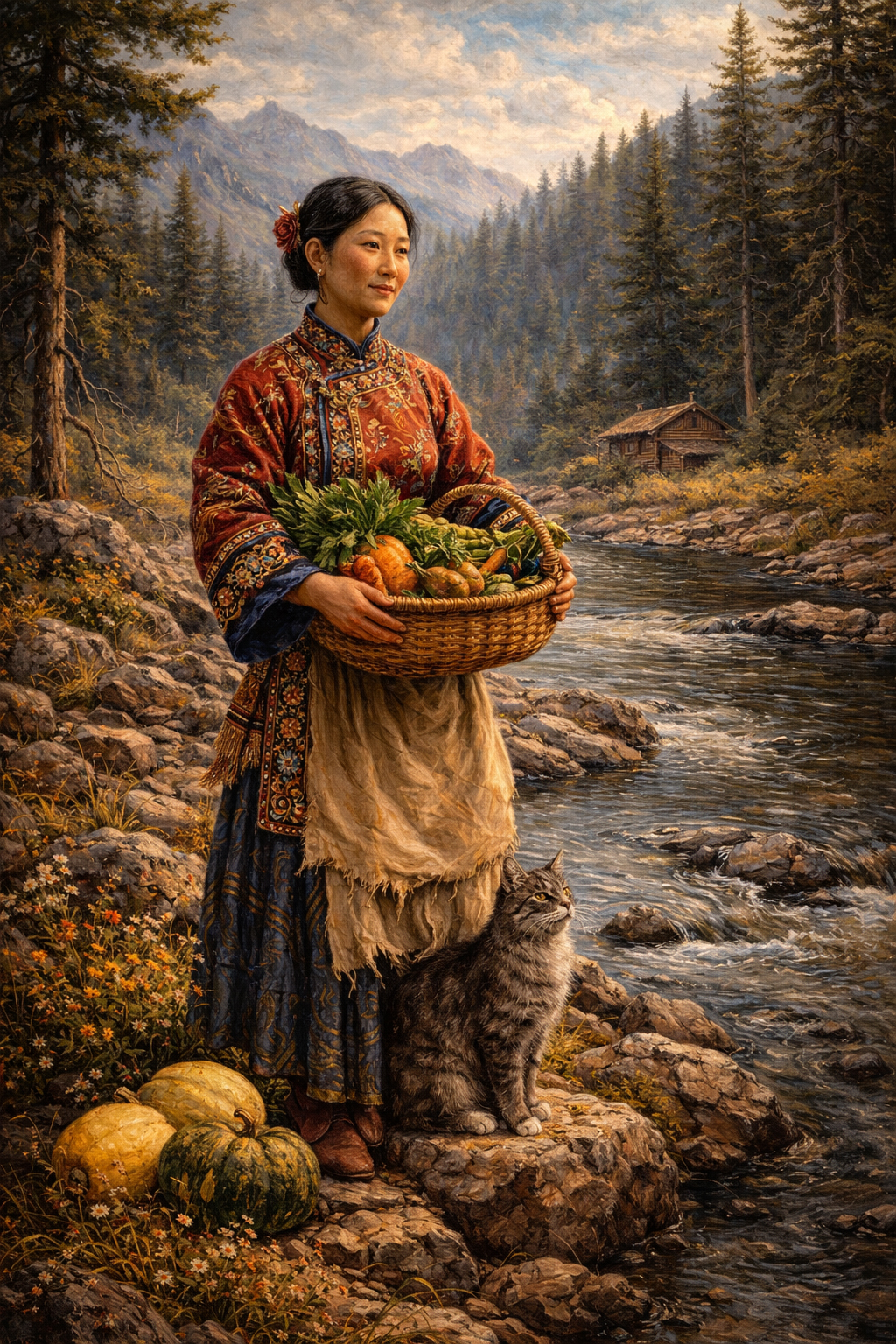
No serious account of Idaho’s original character can remain within the old masculine frame of scouts, senators, miners, and cattle confidence. The real character of a place is tested most clearly by the lives it makes difficult and by the people who nonetheless endure within it. Idaho’s deeper human story includes Indigenous women, Chinese American lives, migrants, laborers, people in domestic and river worlds, and those whose contributions were once treated as side notes because they did not fit the dominant heroic script.
That is why figures such as Sacajawea and Polly Bemis matter so profoundly. They do not merely add diversity to the record. They revise the record’s meaning. Through them, Idaho’s original character becomes something more than rugged self-mythology. It becomes a history of dependence, translation, endurance, relation, coercion, and moral complexity. A serious state should want this complication. It is the difference between image and truth.
The same can be said, in another register, for cultural figures who widen the state’s self-image beyond frontier stereotype: Mildred Bailey, Philo Farnsworth, James Castle, Ezra Pound, Charles Ostner. These names belong to later phases of Idaho’s story, but all of them reveal something foundational. The state’s original character was never merely physical. It had tonal, artistic, musical, intellectual, and imaginative possibilities from the beginning. Those possibilities were often under-acknowledged, but they were there.
The Civic Instinct
One of the more interesting aspects of Idaho’s early life is how quickly civic aspiration appeared alongside roughness. This is easy to mock if one prefers a purely anti-romantic history. But mockery misses something important. A place that is still unstable and extractive, still testing the difference between fortune and fraud, still half-temporary in its built environment, can nevertheless desire law, ceremony, architecture, representation, and artistic form. Idaho did. The desire is visible in newspapers, in territorial argument, in early public art, in the figure of Borah later projecting Idaho’s seriousness into national politics.
This civic instinct is part of the original character because it reveals ambition of a more lasting sort. Idaho did not want only wealth or movement. It wanted standing. It wanted to become a place that could see itself as more than an accident of extraction. This instinct remains visible today wherever Idaho is at its most attractive: in public dignity without too much display, in communities that remain practical without surrendering form, in a style of refinement that still seems answerable to weather and use rather than to pure performance.
The most interesting Idaho has always balanced two desires: to remain real, and to become worthy of memory.
What Still Remains
So what remains of Idaho’s original character now, after statehood, modernization, dams, tourism, second homes, luxury lodges, new economies, old resentments, and the softening effects of contemporary self-marketing? More than one might think. The original severity is still there in the land and in the expectation of competence. The older reserve is still present in the state’s social manners and its better forms of public space. The practical imagination remains alive in its inventors, builders, outfitters, and working intelligence. The older memory, though often neglected, still waits beneath the surface, especially in the places where geography refuses simplification.
This is why Idaho can feel so distinctive even now. It has not entirely traded its first character for a newer script. The state has absorbed luxury, branding, remote-work fantasy, recreation economy gloss, and all the rest. But beneath those layers remains the older structure: hard country, room, weather, Indigenous depth, practical vision, mining ambition, civic hunger, and a durable suspicion of false display. Idaho’s uniqueness comes partly from the fact that its first lessons are still legible in the present.
And perhaps that is the right final point. A state does not become itself once and for all. It composes and recomposes its identity over time. But the first terms matter. Idaho’s first terms were not superficial. They were demanding. That is why the state still has force. It was built, morally and materially, in a country that required adults. Whatever else Idaho becomes, it is wiser when it remembers that.
Idaho’s original character, then, is not a slogan. It is a compound inheritance: homeland, passage, extraction, endurance, distance, civic aspiration, and the long education of people learning how to live in a place beautiful enough to tempt illusion and hard enough to punish it. That combination is the beginning of the state. It may also be its best truth.