
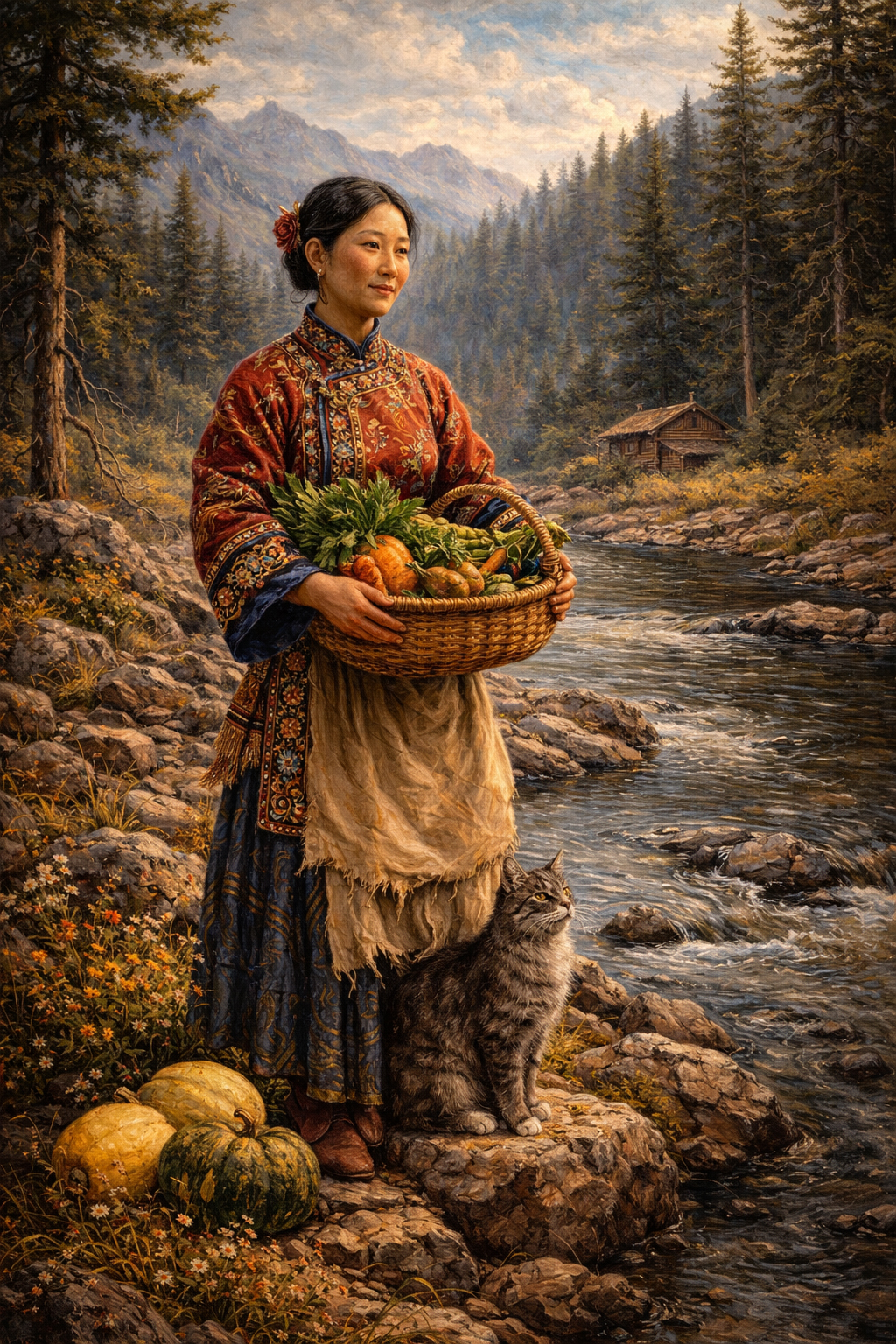
Polly Bemis entered Idaho history by a route no one should have to take. Born in northern China in the nineteenth century, she was sold as a child amid upheaval and eventually brought across the Pacific into the brutal circuits of western migration and commerce. By the time her story reaches Idaho, much has already been taken from her: family, country, safety, the ordinary assumption that life belongs first to oneself. That beginning matters because it clarifies the scale of what follows. Polly Bemis did not merely “settle” in Idaho. She survived her way into it.
The word legend in the title of this piece must therefore be used carefully. American frontier legends are often too eager to sand down pain into picturesque anecdote. Polly’s life deserves something more exact. What made her remarkable was not some decorative eccentricity but the fact that she built dignity under conditions arranged against it. Her legend, if one insists on the word, rests not on fantasy but on endurance.
Polly Bemis matters because she makes Idaho’s past less convenient and more true.
That truth begins with the river. Rivers in western memory are often treated as symbols of freedom, rough beauty, masculine testing. For Polly Bemis the river was also home, geography, labor, separation, and survival. Her life along the Salmon River has been remembered because the setting is dramatic, yes, but the setting alone would mean little without the force of personality inside it. What stays with readers is not only the landscape. It is the woman who made a life there under improbable circumstances and with unmistakable character.
Frontier history tends to privilege the loud. The miner, the scout, the lawman, the politician, the promoter. Polly’s story reminds us that some of the most important people in western history were important not because they dominated the official record, but because they exposed the moral limits of that record. She stands at the crossing of several American narratives that are too often told separately: Chinese migration, women’s survival, the economics of coercion, the myth of the frontier, and the possibility of belonging after violence.
More Than a Frontier Curiosity
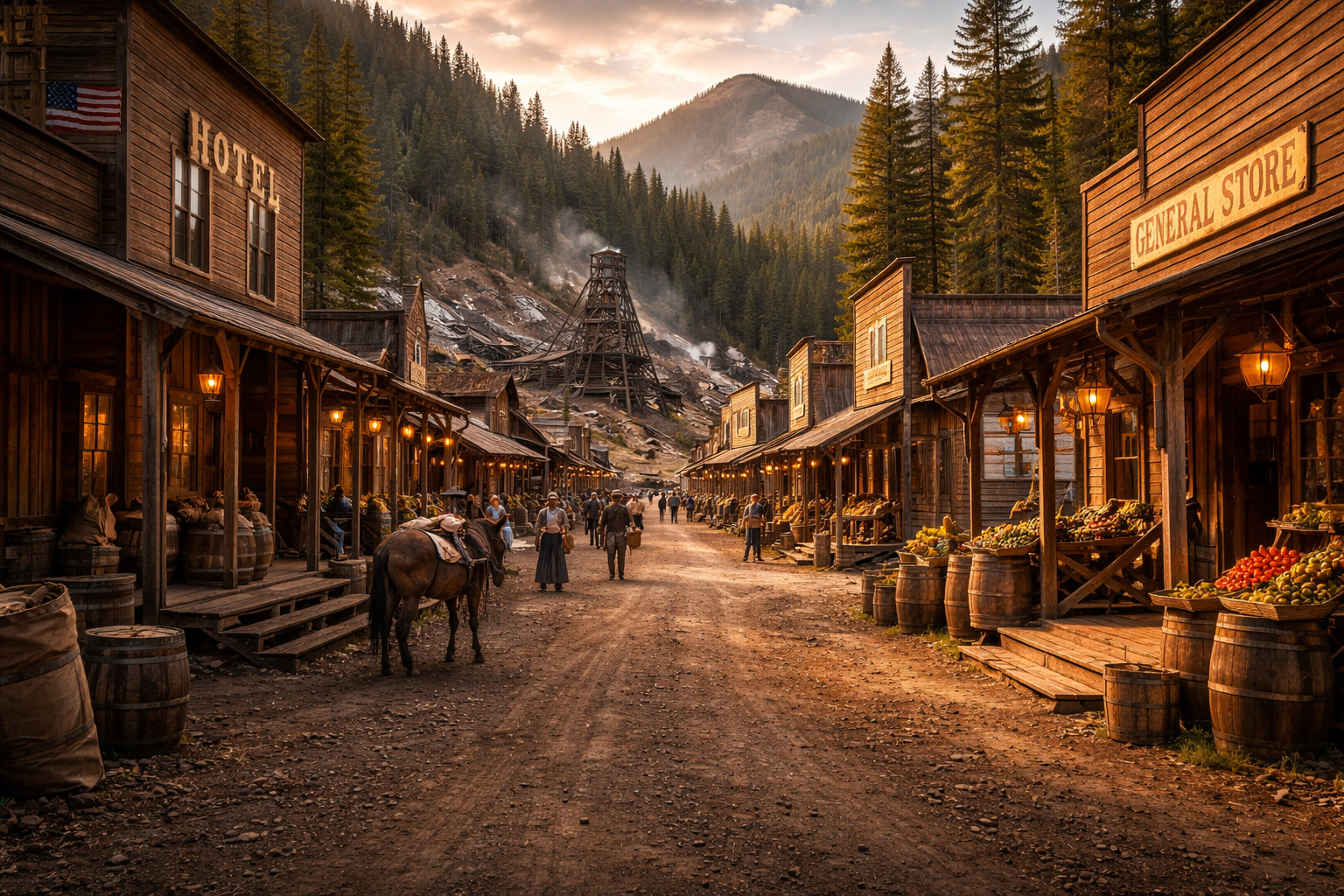
There is always a risk that figures like Polly Bemis will be handled as “color”—the vivid side story that lends local history texture while leaving its main structure untouched. That would be a profound mistake. Her life is not a charming sidebar to Idaho history. It is one of the ways Idaho history becomes intelligible. Through her, the frontier stops looking simple. It becomes what it was: ethnically entangled, morally unstable, dependent on women’s labor, full of improvisation and contradiction, and shaped by people whose stories do not fit the old masculine template.
Polly is therefore important not only because she was remarkable, but because of what her remarkableness reveals. It reveals the permeability of the frontier. It reveals how many worlds met in Idaho long before modern multicultural language tried to name such crossings. It reveals that a river cabin in Idaho could contain international history. It reveals, too, the astonishing resilience of personality. For all the hardship written into her early life, Polly is remembered not only as a victim of systems but as a person of wit, steadiness, hospitality, and local presence.
That distinction matters immensely. The historical temptation is to flatten people into symbols of suffering or symbols of triumph. Polly resists both flattenings. She suffered, certainly. She also endured, adapted, cared, and became inseparable from a particular Idaho place. The more closely one looks, the less abstract she becomes. She emerges instead as what the best historical figures always are: specific.
The Strange Grace of Survival
There is a grace in Polly Bemis’s story, but it is not the soft grace of nostalgia. It is the harder grace of continuance. She remained. She worked. She made a life that others came to remember not merely because it was improbable, but because it was inhabited with dignity. This is one reason she feels so modern to read about now. Contemporary audiences are rightly suspicious of frontier romanticism, yet Polly’s story still moves them. It moves them because the core drama is not conquest of the land. It is the reclamation of self under pressure.
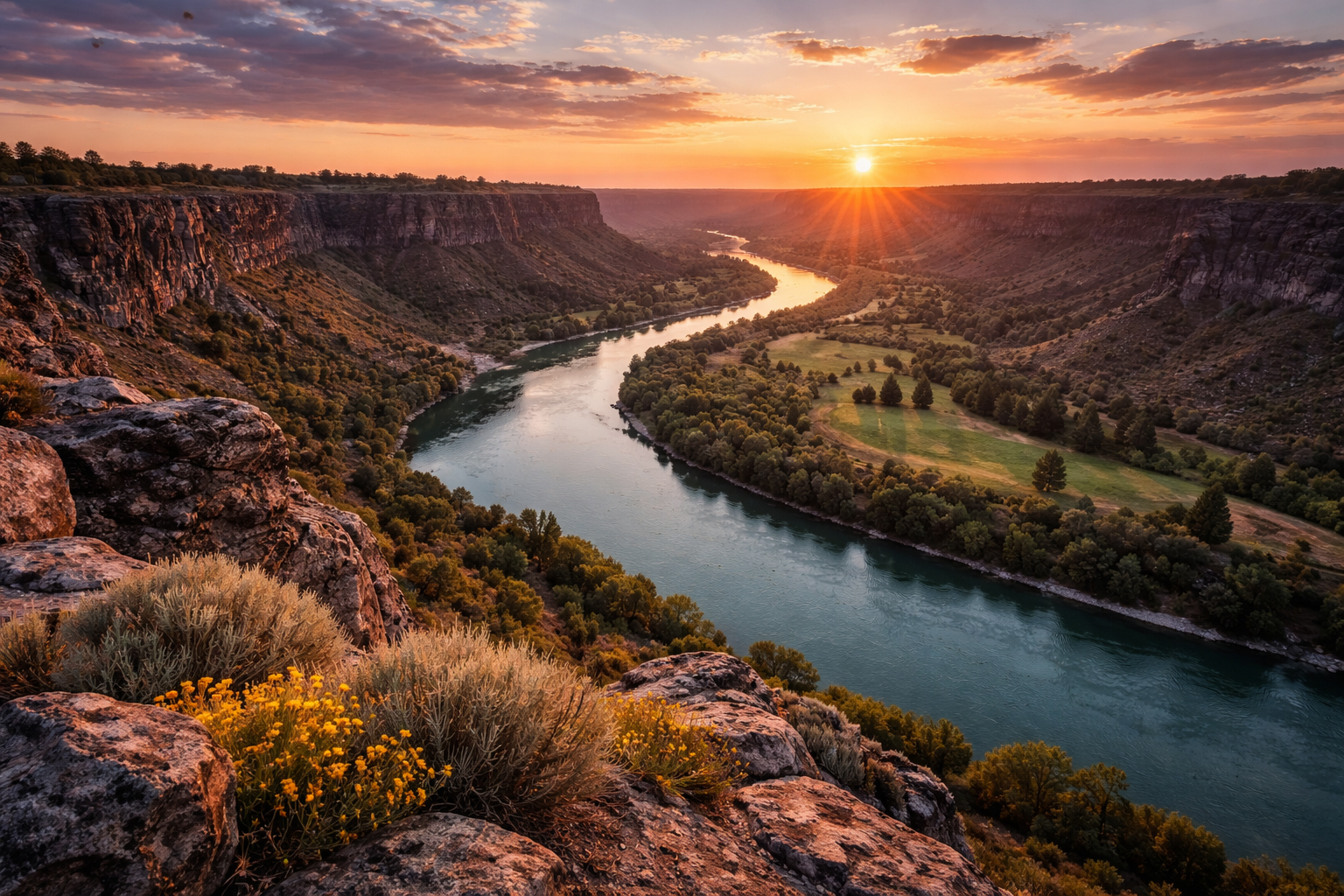
The Idaho river country intensifies this meaning. In an easier story, the river would simply symbolize wild beauty and adventurous independence. In Polly’s story, the river becomes a harsher and more interesting thing. It is beautiful, yes, but beauty here is inseparable from isolation, from logistics, from weather, from the daily terms under which life must actually be sustained. That is why the setting feels earned rather than decorative. The place is not a backdrop. It is part of the ordeal and part of the achievement.
She did not merely live in Idaho’s river country. She altered its moral memory.
It is worth lingering on that phrase. Moral memory. Places are not remembered only by what was built or extracted there. They are also remembered by the kinds of lives they held, the lives that reveal what the place was willing to permit, what it was not prepared to honor in real time, and what later generations must learn how to see more clearly. Polly Bemis belongs to that order of memory. She is one of the people who make Idaho answer for itself in a richer language.
Chinese American Idaho
Polly’s story also enlarges the map of Idaho’s cultural history. Chinese American history in the West is too often reduced to labor statistics, exclusion laws, Chinatowns, railroad camps, and anti-Chinese violence—important as all of these are. But a life like Polly Bemis’s adds another register: intimacy. It shows how national and transpacific history entered the local, the domestic, the personal. Idaho did not merely host abstract patterns of migration. It contained individual destinies shaped by them.
This should matter enormously to the state’s modern self-understanding. Idaho, like many western states, is frequently narrated through a narrowed ethnic imagination. Polly Bemis quietly destroys that simplification. She reminds us that Idaho’s historical fabric has always been more various than its slogans. Her presence on the Salmon River is not an exception to Idaho’s story. It is part of the truth of it.
And yet there is no need to force contemporary language too heavily onto the past. The point is not to recruit Polly into a modern script at the expense of her specific life. The point is to see her clearly enough that the state’s history widens. She compels Idaho to remember that belonging has often been achieved under severe conditions and by people whom official narratives were least prepared to center.
Why Polly Endures
Many frontier figures fade because they were always a little too dependent on myth. Polly endures because the myths around her cannot quite contain her. She is too human for that. Too particular. Too morally charged. Her life bears the marks of historical violence, but it is not reducible to violence. It bears the marks of hardship, but it is not exhausted by hardship. She remains memorable because she carried herself through the conditions of her life with something stronger than mere persistence. She carried style, judgment, and personhood.
One senses this even in the way she is remembered locally: not simply as a tragic figure, and not merely as a survivor, but as someone whose presence mattered. This is perhaps the highest form of historical afterlife. Not that a person fits a lesson neatly, but that the place itself seems diminished if one forgets her. The Salmon River story without Polly Bemis is thinner, less surprising, less honest, and less alive.
That is why she belongs among the strongest individual features in an Idaho magazine of identity. She asks larger questions than many more conventionally famous figures do. What makes a place home after coercion? What does dignity look like when freedom has been historically violated? How does local memory absorb someone who arrived through the worst machinery of the nineteenth century and nevertheless became part of the best memory of a region? Polly Bemis does not answer these questions abstractly. She answers them by having lived.
The State She Deepens
Every state has figures who make it look bigger, and figures who make it look truer. The rare figures do both. Polly Bemis is one of those. She deepens Idaho because she complicates it. She reminds readers that the state’s greatness is not only in alpine lakes, mountain lodges, or political lions. It is also in the lives that force historical honesty. Through her, Idaho becomes not just beautiful or rugged or distinctive, but morally legible.
That is no small contribution. A place with only easy heroes grows intellectually weak. A place with figures like Polly Bemis becomes more serious. It learns how to speak not just of pride, but of debt, complexity, endurance, and the difficult beauty of survival. This is exactly the kind of enlargement a mature regional magazine should pursue. Not correction as scolding, but correction as depth.
Polly Bemis, riverside legend: the phrase works best when we understand that the river is not there for romance alone, and the legend is not there for simplification. Both point toward something sterner and more lasting. She stands in Idaho memory not as an embellishment, but as one of its finest truths.