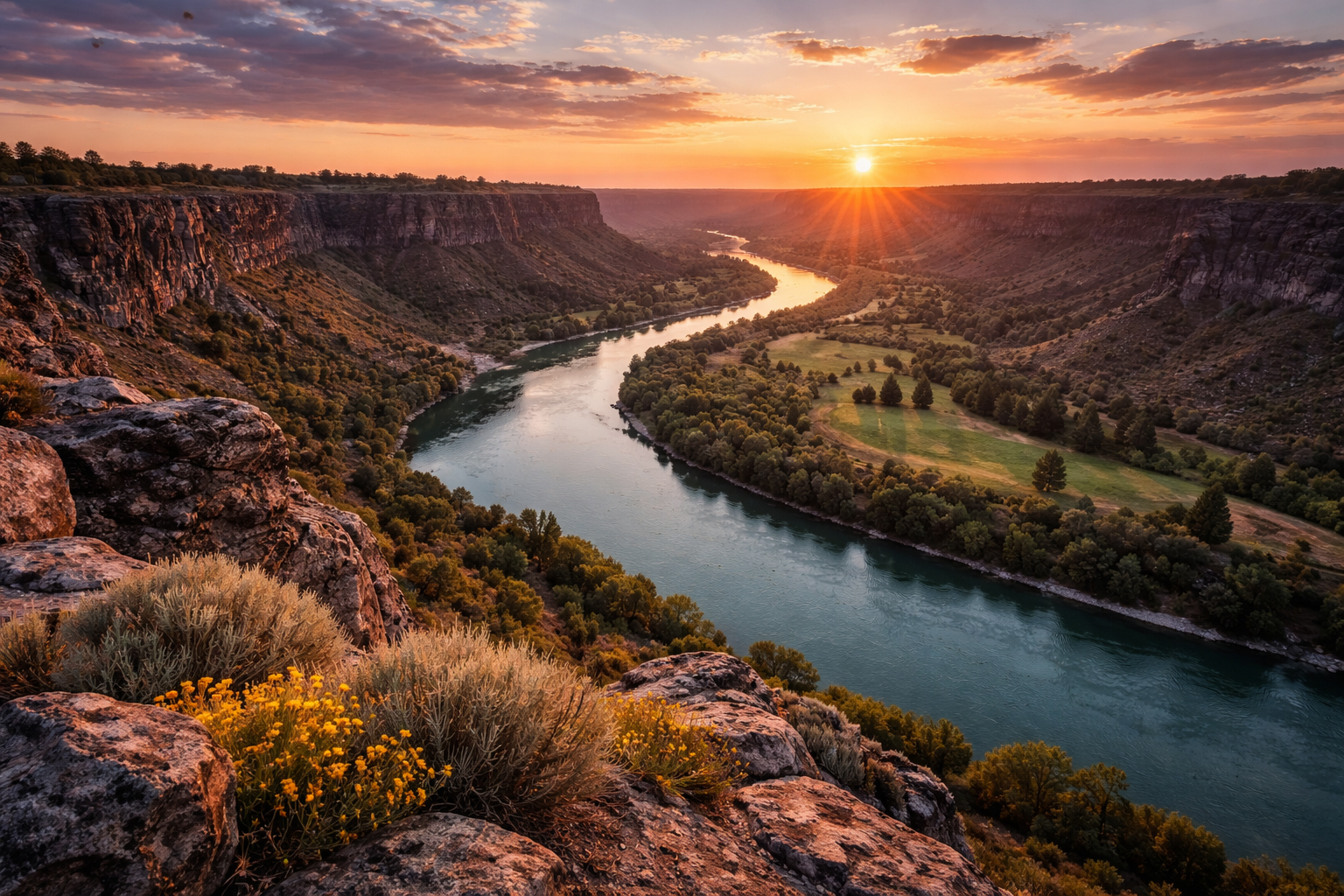
The first thing the Snake River Canyon does is reorganize scale. Streets, cars, dining rooms, bridge lanes, and people themselves all shrink into relation with the larger cut of rock and river. This is one of the canyon’s great gifts. It returns the human scene to proportion without making it feel insignificant. Twin Falls does not disappear beside the canyon. It becomes more legible through it.
That legibility is central to the page. A canyon can easily be written as scenery alone, but the Snake River Canyon asks for something richer. It is geological drama, yes, but also civic infrastructure, tourism logic, walking path, waterfall theater, restaurant view, bridge spectacle, and local identity all at once. The challenge is to show how these pieces belong to the same composition.
The canyon is not an attraction added to Twin Falls. It is the force that taught Twin Falls how dramatic it could be.
Real Places That Explain the Canyon
Below are strong real anchors for the page. Together they give you the best structure for understanding the canyon: where to begin, where to eat, and where to see the water turn fully theatrical.
2015 Neilsen Point Pl, Twin Falls, ID 83301
Phone: (208) 733-3974
Website: visitsouthidaho.com/visitor-info/twin-falls-visitor-center
The right beginning for the page. Perched on the canyon rim, the visitor center gives the reader both literal orientation and the emotional logic of the place: bridge, drop, river, wind, and the sense that Twin Falls was wise enough to put a public welcome exactly where the canyon can make the introduction itself.
4155 Shoshone Falls Grade Rd, Twin Falls, ID 83301
Website: tfid.org/309/Shoshone-Falls
If the canyon is the larger argument, Shoshone Falls is its exclamation point. The City of Twin Falls directs visitors to this address for the falls, and the setting gives the page its most overtly theatrical river scene.
195 River Vista Pl, Twin Falls, ID 83301
Phone: (208) 737-0486
Website: elevation486.com
One of the best restaurant anchors for the page because it openly embraces the canyon as part of the meal. The name itself announces the height above the river, and the setting lets dinner participate in the canyon rather than merely follow it.
330 Canyon Crest Dr, Twin Falls, ID 83301
Phone: (208) 733-9392
Website: canyoncrestevents.com
Canyon Crest gives you another formal canyon-edge option, useful if you want the page to feel less dependent on a single dining room. The address and phone are publicly listed through chamber and venue sources, and the location itself reinforces the point that Twin Falls has learned to dine at the rim without wasting the view.
How to Build the Day Properly
The strongest structure is simple. Begin at the visitor center so the canyon establishes the terms. Move to Shoshone Falls if you want the larger river drama fully revealed. Then return to the rim for dinner or a long late lunch at Elevation 486 or Canyon Crest. That sequence lets the canyon unfold in the right order: overlook, geology, water force, then civilized pause.
What matters is that the page understands the difference between spectacle and composition. Spectacle is easy here. The canyon supplies it almost carelessly. Composition is harder. It means choosing places that let the reader feel how Twin Falls lives with the canyon instead of merely selling it.
The best Snake River Canyon day is not only about seeing the drop. It is about understanding how the whole town has arranged itself around that drop.
The Bridge, the Rim, the City
Any page on this subject will inevitably carry the ghost of the Perrine Bridge even when the bridge is not the formal address anchor of every section. The visitor center rim makes that unavoidable in the best sense. You are reminded immediately that the canyon is not distant scenery but part of the daily engineering and emotional life of the place. Cars cross it. Visitors stop above it. BASE jumpers have made it famous. But the deeper point is more subtle: the bridge tells you Twin Falls has always had to negotiate its canyon rather than merely admire it.
That negotiation is what makes the city interesting. A canyon town with no civic intelligence would feel fragmented, perhaps even bullied by its own landscape. Twin Falls feels shaped instead. The rim walk, the visitor center, the waterfall access, the restaurants on the edge—these are all signs that the city has turned the canyon into a lived civic fact.
The Right Western Drama
Western drama is often overplayed in travel writing. Everything becomes “epic,” “jaw-dropping,” or “unforgettable” until the words themselves lose force. The Snake River Canyon does not need that treatment. It is better served by cooler prose and sharper observation. Basalt, depth, river line, rim, bridge, falls, dinner room. Let the nouns carry the weight. The place already knows how to be dramatic.
That is the real pleasure of building this page. The canyon allows restraint. It lets the writer be measured and still come away with something large. And that is very Idaho, really: grandeur that does not beg to be sold too hard.
The drama of the Snake River Canyon, then, is not only that it is beautiful or steep or visually commanding. It is that the whole Twin Falls experience becomes more articulate because of it. The river cut the land. The city learned to live beside the cut. The visitor, if properly guided, leaves having understood both.