
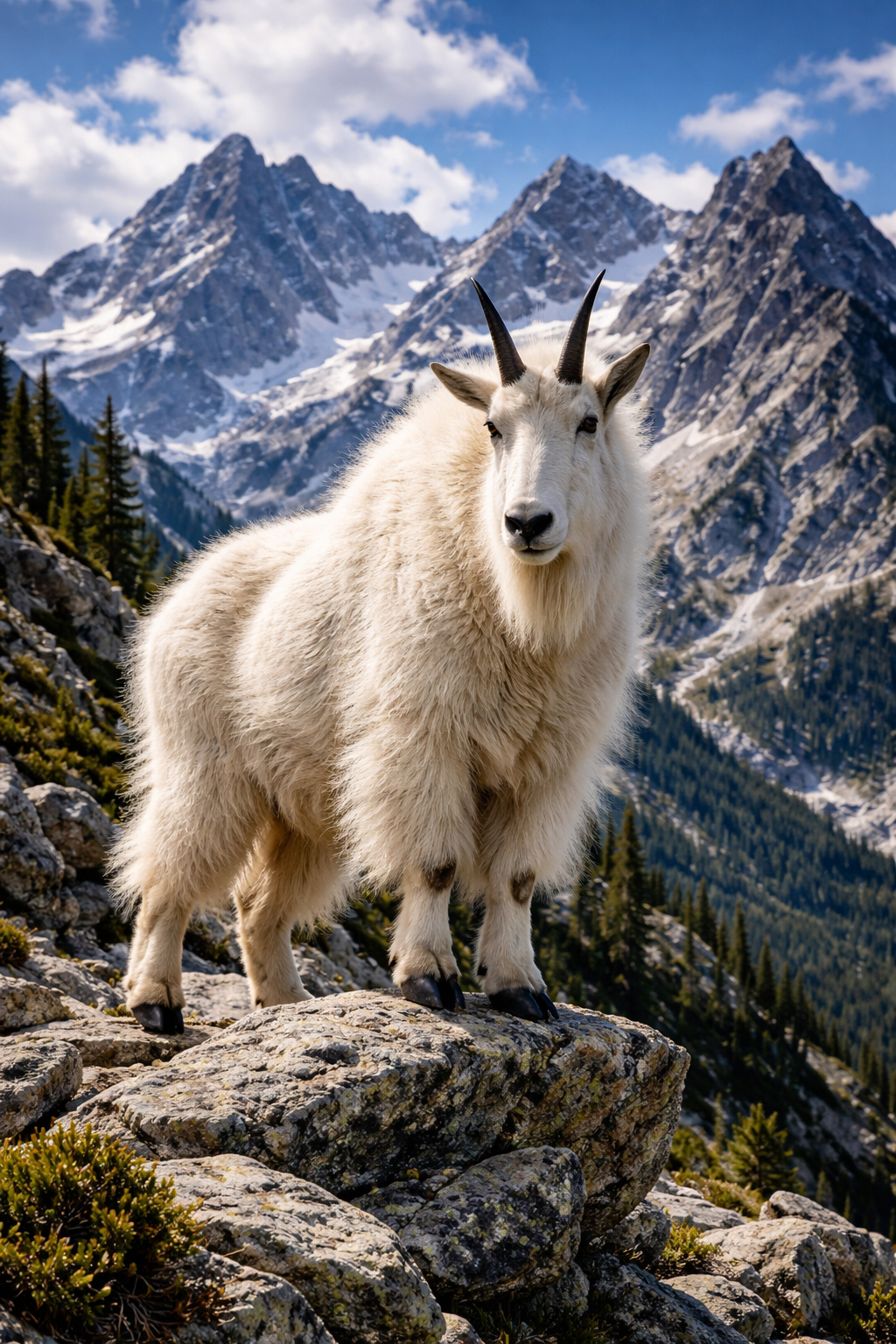
The mountain goat has one of the great visual tricks in all wildlife. It looks, at first glance, almost ornamental: white coat, black horn, solemn profile, a kind of alpine cleanliness against dark rock. But the moment one notices where it is standing, ornament vanishes and something sterner takes its place. This is not a decorative creature. It is a master of bad footing. It belongs to ledges, high ridgelines, loose stone, and the exposed vertical world where most bodies lose confidence almost immediately.
That is why the animal feels so right in Idaho. The state’s high country does not merely flatter the eye; it tests proportion. Peaks, cirques, alpine bowls, broken stone, and weather moving quickly across elevation all produce a landscape in which beauty and difficulty remain fused. The mountain goat fits this fusion perfectly. It makes the severe country look inhabited by intelligence rather than accident.
The mountain goat is not simply adapted to Idaho’s high places. It reveals what those places really are.
This is the secret power of alpine animals. They do not merely populate the peaks. They interpret them. Without the goat, the high ridge is only scenic and forbidding. With the goat, the ridge becomes workable terrain, selected ground, an actual realm of life. The animal teaches you that the mountain is not only an obstacle or an aesthetic experience. It is a system with inhabitants more exact than you.
White Against Stone
The coloration matters more than one first assumes. White fur against rock and sky gives the mountain goat a quality almost heraldic, as though it were a banner lifted out of the alpine itself. Yet the whiteness is not merely symbolic. It belongs to weather and season, to a world where snow and stone define the terms of existence. The animal looks composed by the same palette that composes the peaks.
This gives the goat a kind of purity that is not sentimental. It is not purity in the sense of innocence. It is purity of fit. Every line of the animal seems committed to the conditions around it: the hoof made for edge, the coat made for cold, the body carried with an economy that refuses waste. That economy is one of the reasons the animal feels so noble. It never seems to be trying too hard. It simply belongs where belonging is hardest.
Idaho, when it is most itself, often works in that same register. It is at its best not when it becomes overexplained or overdecorated, but when it lets form and necessity meet cleanly. The mountain goat carries that lesson in living flesh.
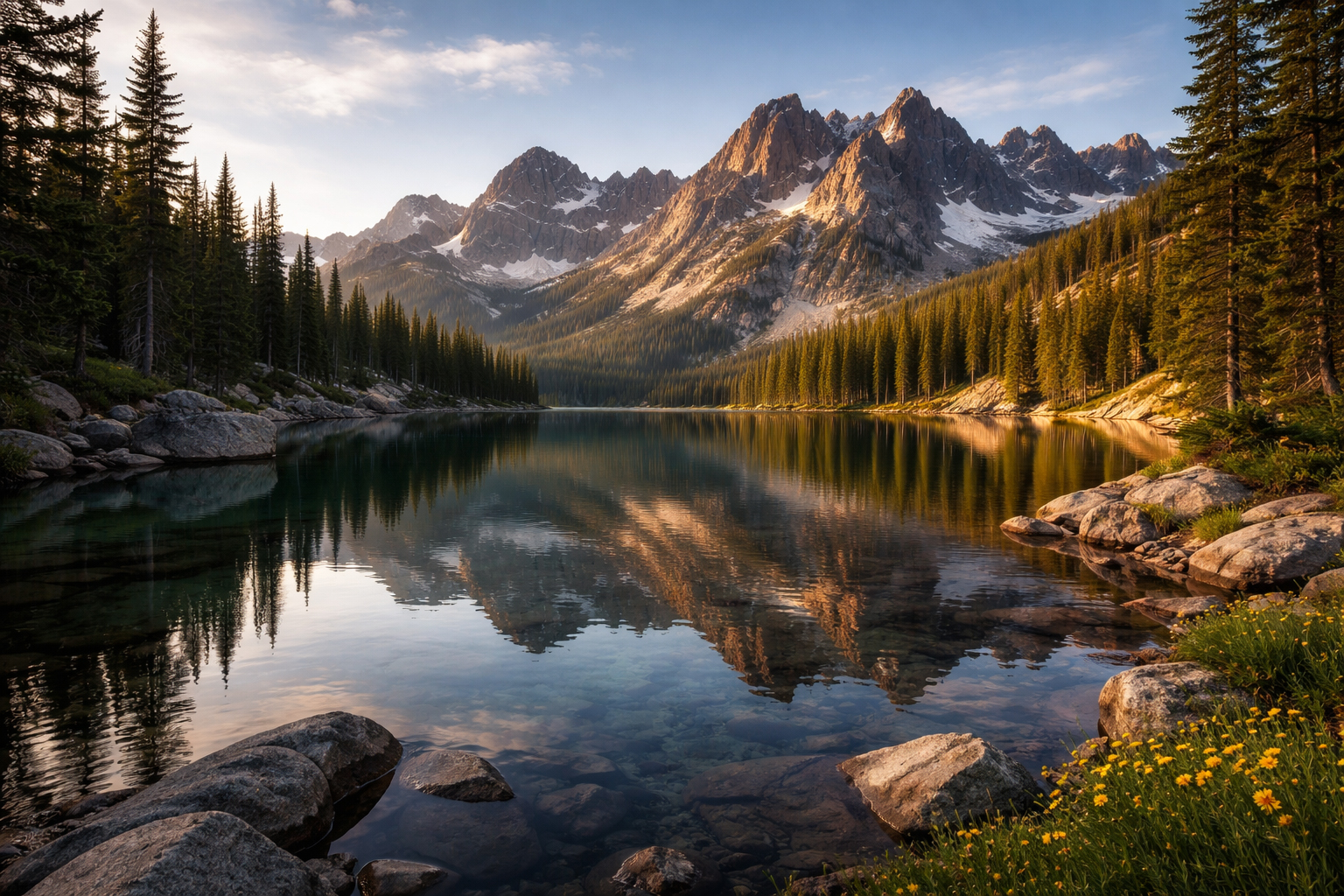
The Ethics of the High Country
Mountains have their own moral atmosphere. They strip away certain illusions and reward certain disciplines. Speed becomes less impressive than footing. Confidence becomes less useful than judgment. Display becomes dangerous. The mountain goat embodies this ethic almost perfectly. It is not a flashy animal. It is an exact one. Its greatness lies in its refusal of unnecessary motion and in its near-supernatural ability to make difficult terrain look ordinary.
That matters because it turns the goat into more than a biological marvel. It becomes an alpine standard. Watching such an animal—even at a distance, even only imaginatively—one feels that the mountain world has its own code, and that the goat is one of its finest practitioners. Calm is not weakness there. It is survival refined into style.
Idaho needs animals like this in its symbolic life. Too much state identity gets built around blunt forms of toughness. The mountain goat offers a better version: toughness governed by balance, by restraint, by a body so intimately educated by risk that it no longer wastes itself on theatrics. That is a mature kind of force.
The mountain goat teaches the oldest alpine lesson: in hard country, style is a form of survival.
The Peak as a Working World
The high peaks are often treated as the final chapter of scenery, the place where the eye goes to be rewarded after the forests, rivers, and meadows have had their turn. But to the mountain goat the peak is not climax. It is workplace, route, shelter, and ordinary terms of existence. This shift in perspective is one of the most valuable things the animal gives us. It returns function to beauty.
In Idaho, where so much of the landscape is now consumed recreationally, that correction is especially important. The mountain is not only a place where hikers feel elevated and photographers feel grateful. It is also a place of weather pressure, animal intelligence, and ecological seriousness. The goat makes that seriousness visible. It restores consequence to the view.
And yet there is nothing dour about this. On the contrary, it makes the peaks more alive. A world with mountain goats in it is a richer, sharper world than one in which the peaks exist only for human moods. The creature keeps the high country from becoming a backdrop. It insists on another center of life.
Why the Goat Feels Older Than the View
There is something almost primeval about the mountain goat’s relation to rock. Not prehistoric in the sturgeon sense, nor spectral in the caribou sense, but old in a cleaner way. One has the impression that the animal has been standing above the valley before the valley learned how to describe itself. It feels less like a recent inhabitant than like one of the mountain’s original decisions.
This impression is, of course, partly aesthetic. Still, it helps explain why the goat’s image holds so strongly. It appears as if the alpine had to invent such a creature in order to complete its own meaning. Steep stone, sparse growth, wind, cold, exposure—and then the white animal poised at precisely the point where all of these elements meet. The scene feels less accidental than inevitable.
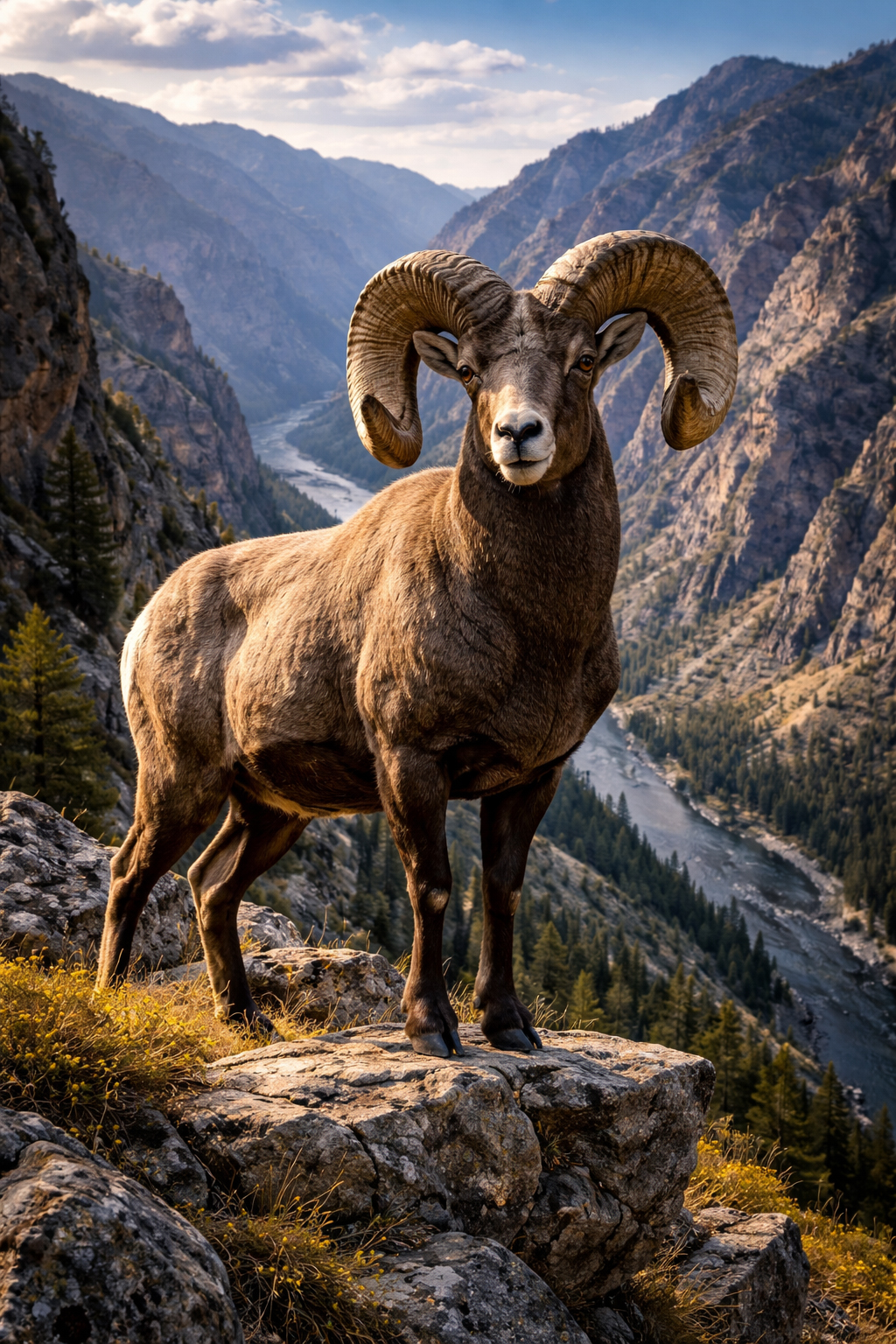
This is why the mountain goat broadens Idaho’s animal identity so effectively. It shifts attention from the more familiar drama of rivers and forests to the upper register of the state. It says that Idaho is not merely broad and scenic; it is vertical, severe, and beautifully inconvenient.
The High Peaks and the State’s Self-Image
Every state chooses, consciously or not, the creatures through which it imagines itself. The mountain goat is a particularly good choice for Idaho because it resists sentimentality. It is handsome, yes, but not cute. It is impressive, but not in the easy way of size or speed alone. It asks for a more disciplined admiration. One must appreciate balance, selection, and composure under altitude. That is a more interesting style of praise, and it suits Idaho’s better instincts.
The state often appears most attractive when it allows itself these harder emblems. The goat, like the peregrine or the woodland caribou, keeps Idaho from becoming too soft in its self-understanding. It reminds the state that one of its deepest distinctions lies in the kind of country where not everything can be possessed easily. Some of the best Idaho remains above the ordinary line of comfort.
Idaho becomes more itself the moment it remembers that some of its finest creatures live where ease does not.
On the High Peaks
The title lands where it should: on the high peaks. Not near them, not beneath them, but on them. The mountain goat is a summit creature in the emotional sense, even when it is not literally on the highest point available. It belongs to the upper argument of the state—the cold edge where weather hardens, scenery stops being passive, and every movement suggests decision.
For a magazine called The Idaho Identity, that matters. The goat gives us a way to talk about altitude not just as geography, but as character. It represents the state at one of its clearest settings: white, severe, controlled, answerable to the land, and entirely uninterested in making the hard thing look easy for our comfort. It makes the hard thing look easy only because it has earned the right to.
Mountain Goat on the High Peaks: the phrase feels complete because the animal feels complete there. It stands in Idaho’s upper country as one of the state’s most convincing truths—less a symbol added to the mountain than the mountain’s own idea of grace made visible.