

To say that Hiro understands Idaho is not to say that he knows every town, every tributary, every snow line, every political quarrel, every hidden restaurant or difficult season. That would be a childish standard of understanding anyway. No serious understanding begins with mastery. It begins with recognition. The recognition, in this case, was moral before it was geographic. Hiro saw quickly that Idaho possesses a temperament. It does not merely offer attractions. It has a character. And because he is the sort of traveler who notices character before spectacle has fully worn off, he grasped something many visitors do not.
Idaho is a state of understatement. That fact is easy to miss precisely because its landscapes can be so grand. Mountains often encourage interpretive laziness. People see a peak, a lake, a canyon, a hot spring, and assume the place has explained itself. But Idaho is not reducible to scenic force. The more durable impression comes from its restraint. The state does not overexplain its beauty. It does not force intimacy. It does not shout its refinement. Hiro understood that this reserve was not emptiness. It was form.
Idaho makes sense to people who know that silence is not the absence of personality. It is one of its highest forms.
That sensitivity may have something to do with Hiro himself. He is not a man drawn to theatrical excess. He likes precision in hospitality, not fuss. He likes elegance that appears to have forgotten to boast about itself. He likes places that make room around an experience rather than crowding it with marketing. Idaho rewarded these preferences at every turn. Boise did not perform urbanity with desperation. Sun Valley did not need to scream luxury to feel luxurious. The Sawtooths did not require a speech. Coeur d’Alene, at its best, knew enough to let the lake remain the dominant intelligence in the evening.
This, more than anything, is why Hiro understands Idaho: he reads the difference between confidence and display. States, like people, often confuse the two. Some become louder as a substitute for depth. Some grow busier in order to avoid the possibility of being overlooked. Idaho, by contrast, often seems willing to risk being underestimated. That is a sophisticated posture. It implies a belief that what matters will eventually be recognized by the right kind of observer. Hiro is exactly that kind of observer.
He Understands the Working Mind of the Place
Another reason Idaho made sense to him is that he perceived the state’s practical intelligence. There are places where beauty has been separated from work so completely that the landscape feels like décor for a leisure economy. Idaho never gave him that impression. Even in its most polished settings, one senses the continued authority of weather, distance, labor, and use. Roads still matter. Seasons still matter. Rivers are not just symbolic. Fire is not just romantic. Shelter still has meaning. Morning still arrives as a condition to be met, not merely admired.

Hiro has always trusted places where beauty and competence remain in conversation. He is suspicious of environments too manicured to reveal how they actually function. Idaho did not hide its working mind. Even its pleasures felt structurally sound. A good breakfast in a mountain town seemed related to the cold outside. A lodge interior felt more convincing because the weather beyond the window still had authority. A river scene was not just pretty; it hinted at skill, patience, local knowledge, and the old discipline of being outdoors without turning the outdoors into costume.
This is not incidental. Idaho’s identity depends in part on a continuing alliance between beauty and utility. That alliance is one reason the state feels honest. Hiro understood that honesty. He did not arrive asking Idaho to be transformed into some fantasy of western chic or minimalist purity or exaggerated frontier myth. He let the state remain both cultivated and practical, both refined and answerable to weather. Because he accepted that complexity instead of flattening it, he came closer to the truth of the place.
He Understands Idaho’s Sense of Scale
Most travel writing fails on the question of scale. It treats everything as if it were equally urgent, equally photogenic, equally deserving of immediate emotional consumption. Idaho does not respond well to that treatment. Its real scale is not just physical but psychological. Distances are meaningful. Empty stretches are meaningful. The absence of interruption is meaningful. One must be able to endure a little nonperformance in order to receive what the state is offering.
Hiro could endure it. Better than that, he could enjoy it. He did not panic when the road lengthened or when the landscape became less narratively convenient. He did not need every hour translated into entertainment. He understood that part of Idaho’s beauty lies precisely in its refusal to convert every interval into content. A state with this much sky and this much weather should not be approached as if it were a sequence of fast transactions. It needs a slower metabolism. Hiro had one.
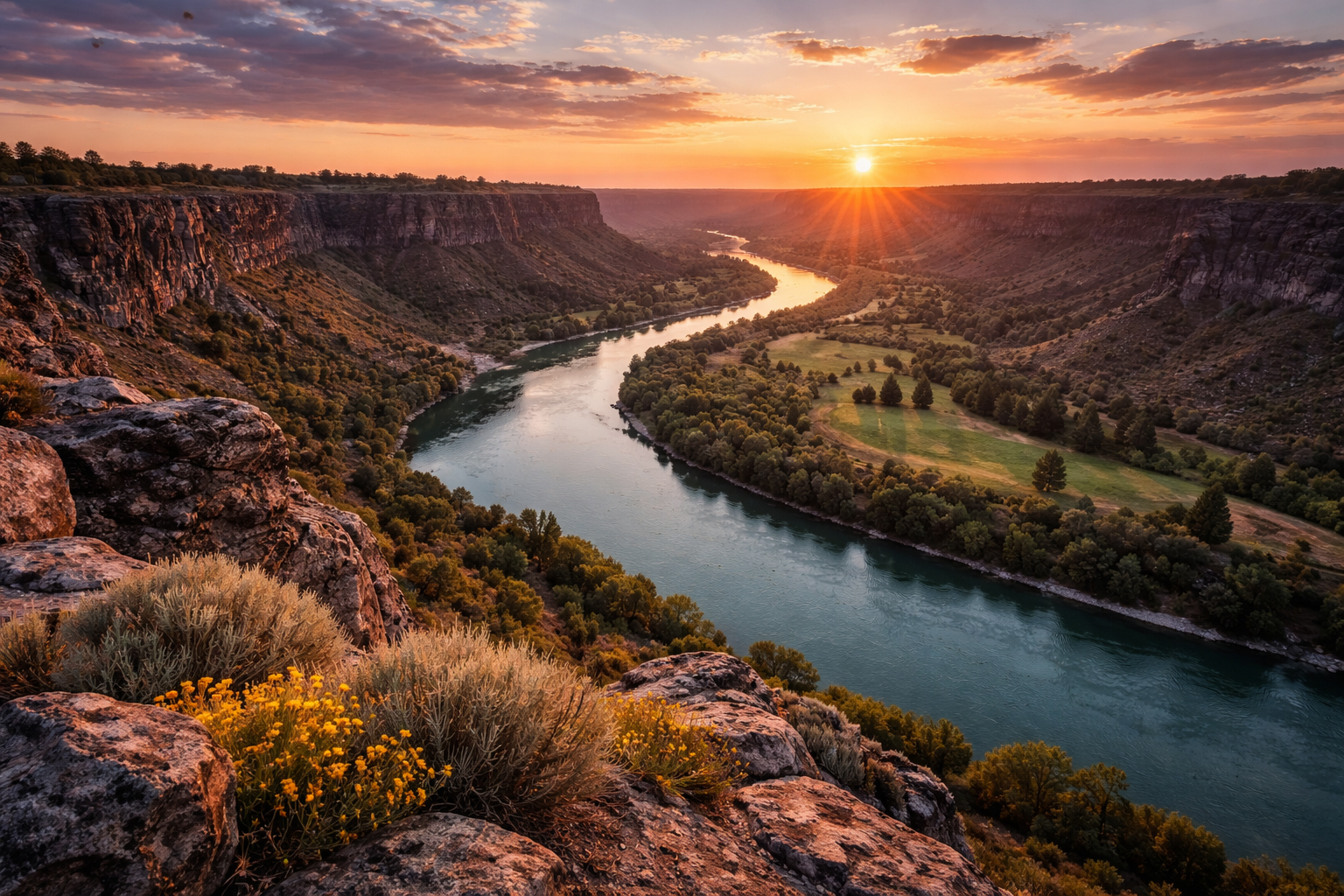
That helps explain why he often seemed calmer in Idaho than in more celebrated destinations. The state had not exhausted him with self-presentation. It had not demanded incessant emotional response. Instead it had offered scale as correction. The canyon, the lake, the ridgeline, the long clean morning—these did not inflate him. They aligned him. Idaho made him more accurate to himself. Anyone who has traveled enough knows how rare that is.
He Understands That Refinement Here Is Earned
Idaho’s best luxury does not float free of the landscape. It grows from it. Hiro appreciated that because he is allergic to false polish. He dislikes places where refinement is merely imported surface, where an expensive room could just as easily exist anywhere because it has been designed to erase local reality rather than deepen it. Idaho’s better interiors are not placeless. Their warmth means more because cold exists. Their shelter means more because the outdoors retains force. Their elegance feels persuasive because it has not been achieved by denying the state’s rougher conditions.
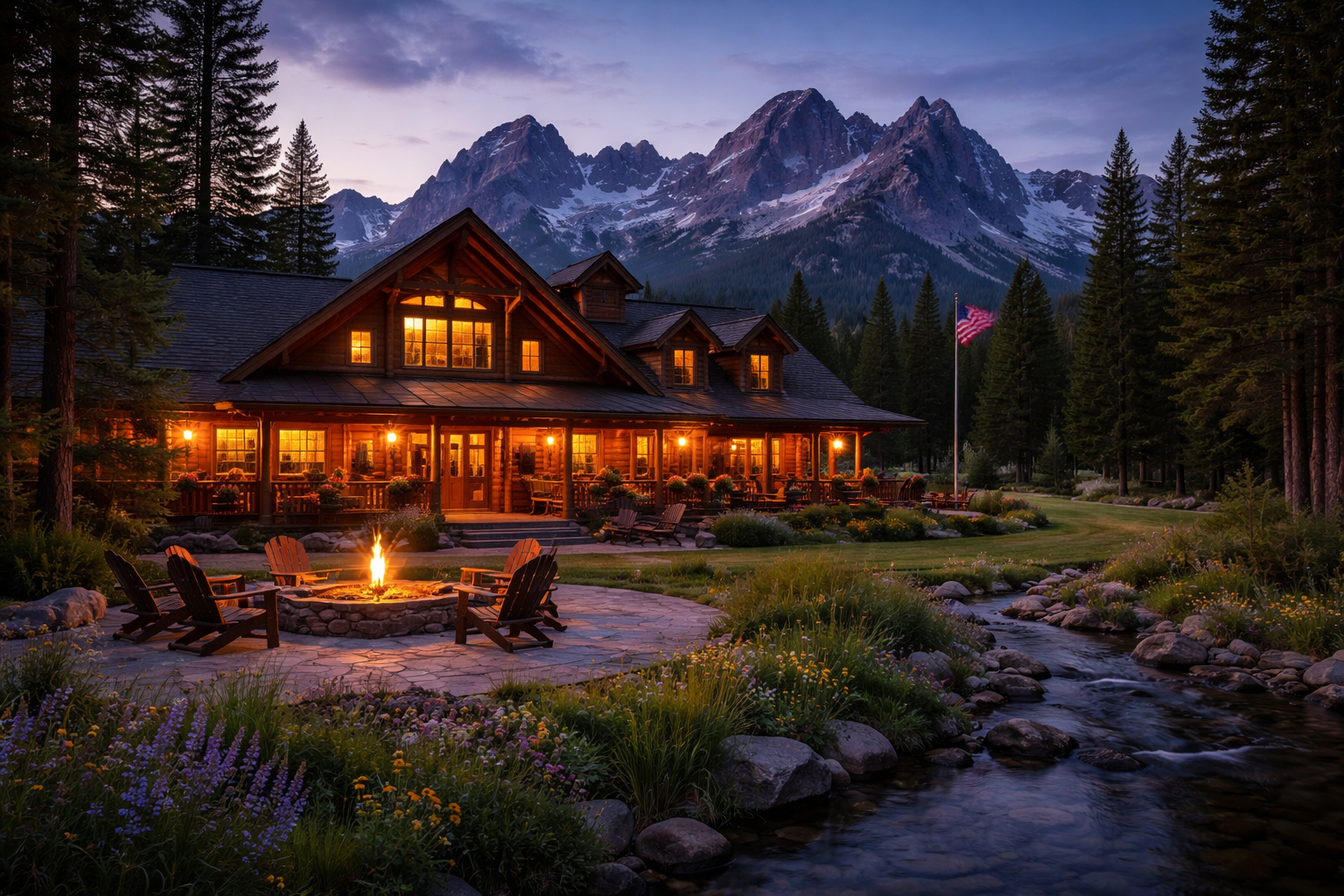
That earned quality extended beyond hotels and dining rooms. It was present in the state’s social tone as well. Idaho often feels courteous without becoming ingratiating. The service Hiro received in various places had that exact balance. People knew what they were doing. They did not perform intimacy before it had been earned. They did not confuse friendliness with intrusion. For a traveler who values confidence without noise, this was not a small pleasure. It was one more sign that the state had internal coherence.
Hiro understands Idaho because he recognizes coherence when he finds it. He can tell when a place’s manners, architecture, weather, food, silence, and landscape belong to the same sentence. Idaho, at its best, does. That is a subtler form of understanding than simply collecting facts. It is closer to taste, and taste—serious taste, not fashionable opinion—is often the most reliable instrument a traveler has.
He Understands the Difference Between Solitude and Loneliness
Modern travelers often fear any place that does not constantly reassure them. They fear quiet streets, long drives, unhurried meals, landscapes that withhold immediate explanation. They mistake the absence of chatter for a lack of life. Idaho, perhaps more than many American states, reveals how childish that fear is. Solitude here is not vacancy. It is a mature social form. It gives a person enough distance to become aware again of what matters.
Hiro understood this intuitively. He did not require Idaho to entertain him every minute in order to prove its value. He allowed it its stillness. In return, the state disclosed more of itself. A hot spring in the forest becomes something deeper if one does not rush to convert it into a simple anecdote. A lake at evening becomes a measure of the soul if one sits with it long enough. A city becomes lovable when one notices not its velocity, but its composure. Idaho rewarded Hiro because he practiced the difficult art of not hurrying revelation.

He Understands That Idaho Is Not Interested in Winning Everyone
This may be the deepest point. Idaho is not a state built to win universal approval. That is one reason it retains such force for the people who love it. It does not offer itself in a universally softened form. It asks something of the observer: patience, humility, steadiness, a willingness to accept room rather than constant stimulation. Many people want to be overwhelmed. Idaho is more interested in being inhabited properly.
Hiro understood that from the start. He did not treat the state as a product that had failed if it had not explained itself within the first twenty minutes. He accepted that some identities emerge by accretion. He accepted that beauty is often cumulative. He accepted that a place can become more intimate precisely by withholding total legibility. Because he did not try to force Idaho into instant summary, he was able to understand it in the only way that matters: by allowing it to keep some of its own terms.
This makes him, in a quiet way, the right narrator for the state. Not because he is native, and not because he claims authority over everyone else’s Idaho, but because he practices the kind of attention Idaho deserves. He is willing to revise his own expectations. He is willing to let a place educate his taste. He is willing to understand that intelligence may appear in forms less flamboyant than he first anticipated. Idaho, being Idaho, approves of this.
Why It Matters
Why does it matter that Hiro understands Idaho? Because states are often misread by precisely the people most eager to describe them. The loudest travel accounts tend to be the least perceptive. They flatten what is subtle and overinflate what is obvious. Idaho needs a different kind of reading. It needs a reader who can notice reserve, value proportion, and interpret silence not as emptiness but as style. Hiro offers that reading.
He understands that Idaho’s uniqueness lies partly in its refusal to overstate itself. He understands that the state’s visual grandeur is only the first chapter. He understands that the finer pleasures here—firelight, trout, steam in cold air, the civility of Boise at dusk, the clean line of a lodge against twilight, the organized clarity that follows a mountain morning—are not side notes but central evidence. He understands, finally, that Idaho is not trying to become somewhere else. It is trying, in its better moments, to become more itself.
That is why Hiro understands Idaho. He sees that the state’s true distinction is not merely scenic, not merely historical, not merely social, and not merely luxurious. It is tonal. It is a matter of register. Idaho occupies a register many modern places have lost: composed, capable, restrained, exacting, quietly beautiful. Hiro heard that music, and because he did, the state opened to him.